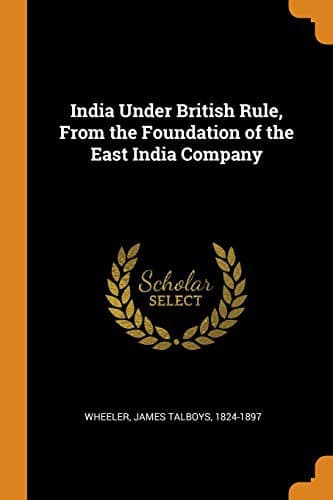
India Under British Rule from the Foundation of the East India CompanyWheeler, James Talboys
History
India Under British Rule from the Foundation of the East India Company
Wheeler, James Talboys
India -- History -- British occupation, 1765-1947
Meanwhile the war against France and Napoleon had extended to eastern
waters. The island of the Mauritius had become a French depôt for
frigates and privateers, which swept the seas from Madagascar to Java,
until the East India Company reckoned its losses by millions, and
private traders were brought to the brink of ruin. Lord Minto sent one
expedition, which wrested the Mauritius from the French; and he
conducted another expedition in person, which wrested the island of Java
from the Dutch, who at that time were the allies of France. The
Mauritius has remained a British possession until this day, but Java was
restored to Holland at the conclusion of the war.
[Sidenote: Anarchy in Rajputana.]
§9. During the struggle against France difficulties were arising in
Western Hindustan. The princes of Rajputana had been engaged in wars and
feuds amongst themselves from a remote antiquity, but for nearly a
century they had been also exposed to the raids and depredations of
Mahratta armies. Lord Wellesley had brought the Rajput princes into
subsidiary alliance with the British government, but the treaties had
been annulled by Sir George Barlow, and war and pillage were as rampant
as ever. The evil had been aggravated by the rise of Afghan adventurers,
who had conquered territories and founded new kingdoms in central India
amidst the prevailing anarchy; whilst a low class of freebooters, known
as Pindharies, plundered the villagers in the skirts of the Mahratta
armies, or robbed and pillaged the surrounding territories, with a
savage ferocity which rendered them a pest and terror.
[Sidenote: The Rana, or suzerain.]
The hereditary suzerain of the Rajputs was a prince known as the Rana of
Oodeypore. The Rana claimed descent from Rama, the hero of ancient Oudh,
and incarnation of Vishnu or the Sun, whose mythical and divine glory is
celebrated in the Ramayana. Unfortunately the living Rana was a weak and
helpless prince, who was the dependent of his own feudatories, whilst
his territories were at the mercy of Mahrattas and Afghans. He had a
daughter who was regarded as a prize and treasure, not on account of her
beauty or accomplishments, for she was only an immature girl, but
because her high birth would ennoble her bridegroom and her future sons
or daughters.
[Sidenote: War for the Rana's daughter.]
Public-domain text, read in full here on John Shaqi.
Reviews
Reviews
No reviews yet
Be the first to share your thoughts on this work.
Elsewhere in the archive
Join the Discussion
Join the discussion
Sign in to leave a comment or review.
Sign InorCreate an account