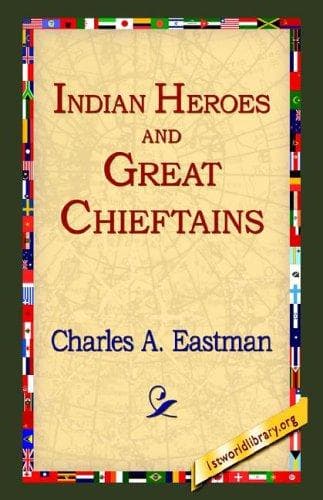
Indian Heroes and Great ChieftainsEastman, Charles A.
History
Indian Heroes and Great Chieftains
Eastman, Charles A.
Dakota Indians -- Biography; Heroes; Indians of North America -- Biography
As a young man, Little Crow was always ready to serve his people as a
messenger to other tribes, a duty involving much danger and hardship.
He was also known as one of the best hunters in his band. Although still
young, he had already a war record when he became chief of the Kaposias,
at a time when the Sioux were facing the greatest and most far-reaching
changes that had ever come to them.
At this juncture in the history of the northwest and its native
inhabitants, the various fur companies had paramount influence. They
did not hesitate to impress the Indians with the idea that they were the
authorized representatives of the white races or peoples, and they were
quick to realize the desirability of controlling the natives through
their most influential chiefs. Little Crow became quite popular with
post traders and factors. He was an orator as well as a diplomat,
and one of the first of his nation to indulge in politics and promote
unstable schemes to the detriment of his people.
When the United States Government went into the business of acquiring
territory from the Indians so that the flood of western settlement might
not be checked, commissions were sent out to negotiate treaties, and in
case of failure it often happened that a delegation of leading men of
the tribe were invited to Washington. At that period, these visiting
chiefs, attired in all the splendor of their costumes of ceremony, were
treated like ambassadors from foreign countries.
One winter in the late eighteen-fifties, a major general of the army
gave a dinner to the Indian chiefs then in the city, and on this
occasion Little Crow was appointed toastmaster. There were present a
number of Senators and members of Congress, as well as judges of the
Supreme Court, cabinet officers, and other distinguished citizens. When
all the guests were seated, the Sioux arose and addressed them with much
dignity as follows:
“Warriors and friends: I am informed that the great white war chief who
of his generosity and comradeship has given us this feast, has expressed
the wish that we may follow to-night the usages and customs of my
people. In other words, this is a warriors’ feast, a braves’ meal.
I call upon the Ojibway chief, the Hole-in-the-Day, to give the lone
wolf’s hunger call, after which we will join him in our usual manner.”
The tall and handsome Ojibway now rose and straightened his superb form
to utter one of the clearest and longest wolf howls that was ever heard
in Washington, and at its close came a tremendous burst of war whoops
that fairly rent the air, and no doubt electrified the officials there
present.
Public-domain text, read in full here on John Shaqi.
Reviews
Reviews
No reviews yet
Be the first to share your thoughts on this work.
Join the Discussion
Join the discussion
Sign in to leave a comment or review.
Sign InorCreate an account