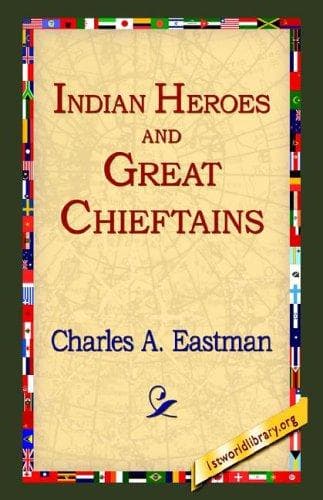
Indian Heroes and Great ChieftainsEastman, Charles A.
History
Indian Heroes and Great Chieftains
Eastman, Charles A.
Dakota Indians -- Biography; Heroes; Indians of North America -- Biography
Like Osceola, he rose suddenly; like Tecumseh he was always impatient
for battle; like Pontiac, he fought on while his allies were suing for
peace, and like Grant, the silent soldier, he was a man of deeds and
not of words. He won from Custer and Fetterman and Crook. He won every
battle that he undertook, with the exception of one or two occasions
when he was surprised in the midst of his women and children, and
even then he managed to extricate himself in safety from a difficult
position.
Early in the year 1876, his runners brought word from Sitting Bull
that all the roving bands would converge upon the upper Tongue River in
Montana for summer feasts and conferences. There was conflicting news
from the reservation. It was rumored that the army would fight the Sioux
to a finish; again, it was said that another commission would be sent
out to treat with them.
The Indians came together early in June, and formed a series of
encampments stretching out from three to four miles, each band keeping
separate camp. On June 17, scouts came in and reported the advance of a
large body of troops under General Crook. The council sent Crazy Horse
with seven hundred men to meet and attack him. These were nearly all
young men, many of them under twenty, the flower of the hostile Sioux.
They set out at night so as to steal a march upon the enemy, but within
three or four miles of his camp they came unexpectedly upon some of his
Crow scouts. There was a hurried exchange of shots; the Crows fled back
to Crook’s camp, pursued by the Sioux. The soldiers had their warning,
and it was impossible to enter the well-protected camp. Again and again
Crazy Horse charged with his bravest men, in the attempt to bring the
troops into the open, but he succeeded only in drawing their fire.
Toward afternoon he withdrew, and returned to camp disappointed. His
scouts remained to watch Crook’s movements, and later brought word
that he had retreated to Goose Creek and seemed to have no further
disposition to disturb the Sioux. It is well known to us that it is
Crook rather than Reno who is to be blamed for cowardice in connection
with Custer’s fate. The latter had no chance to do anything, he was
lucky to save himself; but if Crook had kept on his way, as ordered,
to meet Terry, with his one thousand regulars and two hundred Crow and
Shoshone scouts, he would inevitably have intercepted Custer in his
advance and saved the day for him, and war with the Sioux would have
ended right there. Instead of this, he fell back upon Fort Meade, eating
his horses on the way, in a country swarming with game, for fear of
Crazy Horse and his braves!
The Indians now crossed the divide between the Tongue and the Little Big
Horn, where they felt safe from immediate pursuit. Here, with all their
precautions, they were caught unawares by General Custer, in the midst
of their midday games and festivities, while many were out upon the
daily hunt.
Public-domain text, read in full here on John Shaqi.
Reviews
Reviews
No reviews yet
Be the first to share your thoughts on this work.
Join the Discussion
Join the discussion
Sign in to leave a comment or review.
Sign InorCreate an account