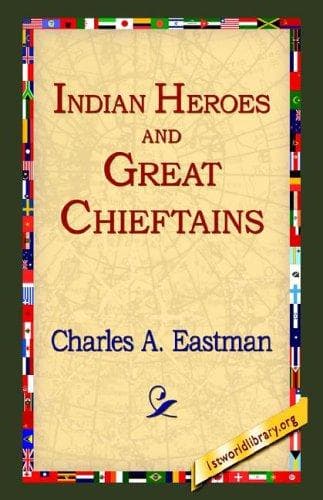
Indian Heroes and Great ChieftainsEastman, Charles A.
History
Indian Heroes and Great Chieftains
Eastman, Charles A.
Dakota Indians -- Biography; Heroes; Indians of North America -- Biography
For some time he held out, but the rapid disappearance of the buffalo,
their only means of support, probably weighed with him more than any
other influence. In July, 1877, he was finally prevailed upon to come in
to Fort Robinson, Nebraska, with several thousand Indians, most of them
Ogallala and Minneconwoju Sioux, on the distinct understanding that the
government would hear and adjust their grievances.
At this juncture General Crook proclaimed Spotted Tail, who had rendered
much valuable service to the army, head chief of the Sioux, which
was resented by many. The attention paid Crazy Horse was offensive to
Spotted Tail and the Indian scouts, who planned a conspiracy against
him. They reported to General Crook that the young chief would murder
him at the next council, and stampede the Sioux into another war. He was
urged not to attend the council and did not, but sent another officer to
represent him. Meanwhile the friends of Crazy Horse discovered the plot
and told him of it. His reply was, “Only cowards are murderers.”
His wife was critically ill at the time, and he decided to take her to
her parents at Spotted Tail agency, whereupon his enemies circulated the
story that he had fled, and a party of scouts was sent after him. They
overtook him riding with his wife and one other but did not undertake to
arrest him, and after he had left the sick woman with her people he went
to call on Captain Lea, the agent for the Brules, accompanied by all
the warriors of the Minneconwoju band. This volunteer escort made an
imposing appearance on horseback, shouting and singing, and in the words
of Captain Lea himself and the missionary, the Reverend Mr. Cleveland,
the situation was extremely critical. Indeed, the scouts who had
followed Crazy Horse from Red Cloud agency were advised not to show
themselves, as some of the warriors had urged that they be taken out and
horsewhipped publicly.
Under these circumstances Crazy Horse again showed his masterful spirit
by holding these young men in check. He said to them in his quiet
way: “It is well to be brave in the field of battle; it is cowardly
to display bravery against one’s own tribesmen. These scouts have been
compelled to do what they did; they are no better than servants of the
white officers. I came here on a peaceful errand.”
The captain urged him to report at army headquarters to explain himself
and correct false rumors, and on his giving consent, furnished him with
a wagon and escort. It has been said that he went back under arrest, but
this is untrue. Indians have boasted that they had a hand in bringing
him in, but their stories are without foundation. He went of his own
accord, either suspecting no treachery or determined to defy it.
Public-domain text, read in full here on John Shaqi.
Reviews
Reviews
No reviews yet
Be the first to share your thoughts on this work.
Join the Discussion
Join the discussion
Sign in to leave a comment or review.
Sign InorCreate an account