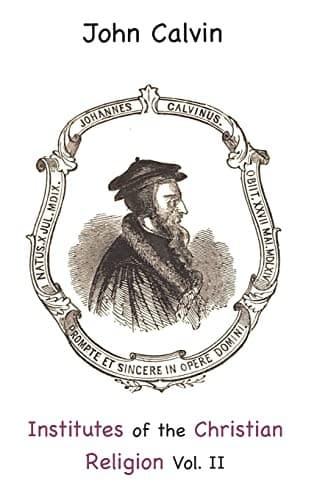
Institutes of the Christian Religion (Vol. 1 of 2)Calvin, Jean
ReligionChristian
Institutes of the Christian Religion (Vol. 1 of 2)
Calvin, Jean
Reformed Church -- Doctrines -- Early works to 1800; Theology, Doctrinal -- Early works to 1800
His COMMENTARIES on the Scriptures have been celebrated for a juster
method of exposition than had been exhibited by any preceding writer.
Above a hundred years after his death, Poole, the author of the Synopsis,
in the preface to that valuable work, says, “Calvin’s Commentaries abound
in solid discussions of theological subjects, and practical improvements
of them. Subsequent writers have borrowed most of their materials from
Calvin, and his interpretations adorn the books even of those who repay
the obligation by reproaching their master.” And nothing can more
satisfactorily evince the high estimation to which they are still entitled
from the biblical student, than the following testimony, given, after the
lapse of another century, by the late learned Bishop Horsley: “I hold the
memory of Calvin in high veneration: his works have a place in my library;
and in the study of the Holy Scriptures, he is one of the commentators
whom I frequently consult.”
But perhaps, of all the writings of Calvin, none has excited so much
attention as his INSTITUTES OF THE CHRISTIAN RELIGION.
His original design in commencing this work is stated by himself, in the
beginning of his dedication, to have been to supply his countrymen, the
French, with an elementary compendium for their instruction in the
principles of true religion. But we learn from Beza that, by the time of
its completion, existing circumstances furnished the Author with an
additional motive for sending it into the world, during his residence at
Basil, whither he had retired to avoid the persecution which was then
raging in France against all the dissentients from the Church of Rome.
Francis the First, king of France, courted the friendship of the
Protestant princes of Germany; and knowing their detestation of the
cruelties which he employed against his subjects of the reformed religion,
he endeavoured to excuse his conduct by alleging that he caused none to be
put to death except some few fanatics; who, so far from taking the word of
God as the rule of their faith, gave themselves up to the impulses of
their disordered imaginations, and even openly avowed a contempt of
magistrates and sovereign princes. Unable to bear such foul aspersions of
his brethren, Calvin determined on the immediate publication of this
treatise, which he thought would serve as an answer to the calumnies
circulated by the enemies of the truth, and as an apology for his pious
and persecuted countrymen.
The Dedication to Francis is one of the most masterly compositions of
modern times. The purity, elegance, and energy of style; the bold, yet
respectful, freedom of address; the firm attachment to the Divine word;
the Christian fortitude in the midst of persecution; the triumphant
refutation of the calumnies of detractors; with other qualities which
distinguish this celebrated remonstrance, will surely permit no reader of
taste or piety to withhold his concurrence from the general admiration
which it has received.
Public-domain text, read in full here on John Shaqi.
Reviews
Reviews
No reviews yet
Be the first to share your thoughts on this work.
Join the Discussion
Join the discussion
Sign in to leave a comment or review.
Sign InorCreate an account