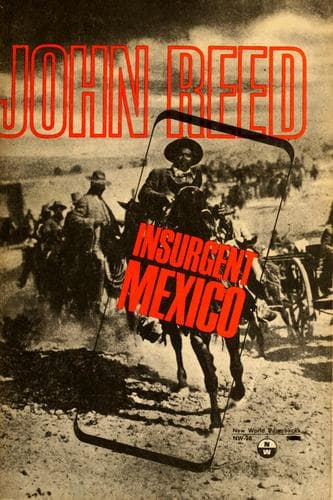
Mexico -- History -- 1910-1946; Mexico -- History -- Revolution, 1910-1920
It was so dark within that at first we could see nothing. Over the two
windows blinds were drawn. On one side was a bed, still unmade, and on
the other a small table covered with papers, upon which stood a tray
containing the remains of breakfast. A tin bucket full of ice with two
or three bottles of wine stood in a corner. As our eyes became
accustomed to the light, we saw the gigantic, khaki-clad figure of Don
Venustiano Carranza sitting in a big chair. There was something strange
in the way he sat there, with his hands on the arms of the chair, as if
he had been placed in it and told not to move. He did not seem to be
thinking, nor to have been working,—you couldn’t imagine him at that
table. You got the impression of a vast, inert body—a statue.
He rose to meet us, a towering figure, seven feet tall it seemed. I
noticed with a kind of shock that in that dark room he wore smoked
glasses; and, although ruddy and full-cheeked, I felt that he was not
well,—the thing you feel about tuberculous patients. That tiny, dark
room, where the First Chief of the Revolution slept and ate and worked,
and from which he hardly ever emerged, seemed too small—like a cell.
Fabela had entered with us. He introduced us one by one to Carranza,
who smiled a vacant, expressionless smile, bowed slightly, and shook our
hands. We all sat down. Indicating the other reporter, who could not
speak Spanish, Fabela said:
"These gentlemen have come to greet you on behalf of the great
newspapers which they represent. This gentleman says that he desires to
present his respectful wishes for your success."
Carranza bowed again slightly, and rose as Fabela stood up, as if to
indicate that the interview was over.
"Allow me to assure the gentlemen," he said, "of my grateful acceptance
of their good wishes."
Again we all shook hands; but as I took his hand I said in Spanish:
"Señor Don Venustiano, my paper is your friend and the friend of the
Constitutionalists."
He stood there as before, a huge mask of a man. But as I spoke he
stopped smiling. His expression remained as vacant as before, but
suddenly he began to speak:
"To the United States I say the Benton case is none of your business.
Benton was a British subject. I will answer to the delegates of Great
Britain when they come to me with representations of their government.
Why should they not come to me? England now has an Ambassador in Mexico
City, who accepts invitations to dinner from Huerta, takes off his hat
to him, and shakes hands with him!
"When Madero was murdered the foreign powers flocked to the spot like
vultures to the dead, and fawned upon the murderer because they had a
few subjects in the Republic who were petty tradesmen doing a dirty
little business."
The First Chief ended as abruptly as he had begun, with the same
immobility of expression, but he clenched and unclenched his hands and
gnawed his mustaches. Fabela hurriedly made a move toward the door.
Public-domain text, read in full here on John Shaqi.
Reviews
Reviews
No reviews yet
Be the first to share your thoughts on this work.
Elsewhere in the archive
Join the Discussion
Join the discussion
Sign in to leave a comment or review.
Sign InorCreate an account