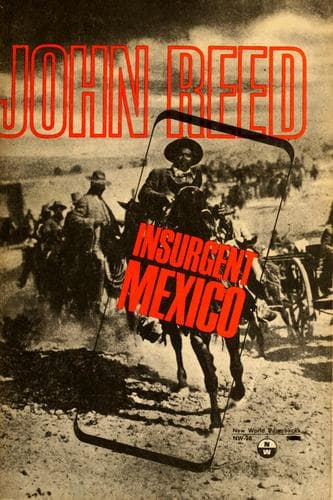
Mexico -- History -- 1910-1946; Mexico -- History -- Revolution, 1910-1920
"But," she said gently, "that is not a bad man. That’s only my son going
after the goats."
Meanwhile, the red-blanketed figure, never even looking back, continued
his placid way over the top of the mountain and disappeared.
*CHAPTER III*
*LOS PASTORES*
The romance of gold hangs over the mountains of Northern Durango like an
old perfume. There, it is rumored, was that mythical Ophir whence the
Aztecs and their mysterious predecessors drew the red gold that Cortez
found in the treasury of Moctezuma. Before the dawn of Mexican history
the Indians scratched these barren hillsides with dull copper knives.
You can still see the traces of their workings. And after them the
Spaniards, with flashing, bright helmets and steel breast-plates, filled
from these mountains the lofty treasure-ships of the Indies. Almost a
thousand miles from the Capital, over trackless deserts and fierce stony
mountains, a tiny colorful fringe of the most brilliant civilization in
Europe flung itself among the canyons and high peaks of this desolate
land; and so far was it from the seat of change that long after Spanish
rule had disappeared from Mexico forever, it persisted here. The
Spaniards enslaved the Indians of the region, of course, and the
torrent-worn, narrow valleys are still sinister with legend. Almost
anybody around Santa Maria del Oro can tell you stories of the old days
when men were flogged to death in the mines, and the Spanish overseers
lived like princes.
But they were a hardy race, these mountaineers. They were always
rebelling. There is a legend of how the Spaniards, finally discovering
themselves alone, two hundred leagues from the seacoast, in the midst of
an overwhelmingly hostile native race, attempted one night to leave the
mountains. Fires sprang up on the high peaks, and the mountain villages
throbbed to the sound of drums. Somewhere in the narrow defiles the
Spaniards disappeared forever. And from that time, until certain
foreigners secured mining concessions there, the place had an evil name.
The authority of the Mexican government barely reached it.
There are two villages which were the capitals of the gold-seeking
Spaniards in this region, and where the Spanish tradition is still
strong: Inde, and Santa Maria del Oro,—usually called El Oro. Inde, the
Spaniards romantically named from their persistent dream that this new
world was India; Santa Maria del Oro was called so on the same principle
that one sung a _Te Deum_ in honor of bloody victory—a gratefulness to
heaven for the finding of red gold, Our Lady of the Gold.
Public-domain text, read in full here on John Shaqi.
Reviews
Reviews
No reviews yet
Be the first to share your thoughts on this work.
Elsewhere in the archive
Join the Discussion
Join the discussion
Sign in to leave a comment or review.
Sign InorCreate an account