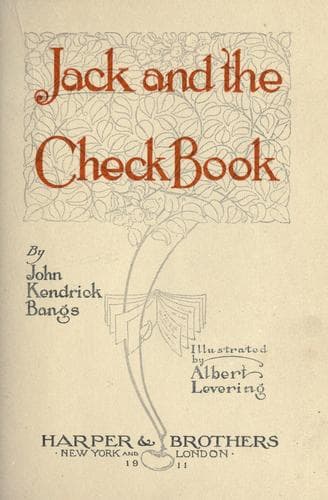
Fairy tales -- Parodies, imitations, etc.; Short stories, American
"THIS IS A HALF-PORTION, SIR," SAID SAMBO 207
"YOU RUBBED THE LAMP, I BELIEVE?" 213
"WHAT DOES THIS MEAN?" THEY DEMANDED 231
JACK AND THE CHECK-BOOK
I
Once upon a time a great many years ago there lived a poor woman who,
having invested all her savings in mining shares, was soon brought to
penury and want. She had bought her modest little home and all there was
in it on the instalment plan, and here she was, upon a certain beautiful
morning in late spring, absolutely penniless, and three days off,
staring her in the face, were payments due on the piano, the kitchen
range and even on the house itself. Moreover, the winter had been a
bitter one. Four times had the water-pipes frozen and burst, and a
plumber's bill of appalling magnitude had come in the morning's mail,
with the stern admonition stamped in red letters at the bottom:
LONG PAST DUE.
PLEASE REMIT.
The unhappy woman was at her wit's ends to know what to do. She had
tried to sell her shares in "Amalgamated War-whoop," only to find that
that once promising company had passed into the hands of a receiver, and
that there was an assessment, amounting to four times their face value,
due on the shares, so that every possible purchaser to whom she applied
refused to take the stock off her hands unless she paid them five
dollars a share for the service and would guarantee them against the
chance of further loss. All other means of raising the necessary
funds--and she had tried them all--proved equally futile. The
savings-banks would not lend her a penny on a house of which the parlor
floor alone was clear of obligation, and the threat of the piano people
to remove that instrument if the March instalment, now a month over-due,
was not immediately forthcoming rendered that both unsalable and
valueless as security for a loan.
[Illustration]
She sat, the perfect picture of hopeless despair, in her rocking-chair,
gazing moodily out of the window, thinking dreadful thoughts, and, it
may be, contemplating the alternative of suicide or marriage with the
village magnate, a miserable villain whom everybody detested, and who,
everybody knew very well, had been instrumental in the ruin of her
deceased husband, a once prosperous haberdasher. But on a sudden her
look of despair faded wholly away and a great light of happiness
illumined her eyes, as up the garden path, whistling merrily as he
strode along, came her son Jack, a lad of fifteen, the comfort and
solace of her lonely days.
"Dear boy!" she murmured softly to herself as he waved his hand at her,
"he is the only thing I have left that there isn't something due on."
The boy, entering the room, still whistling, flung his cap up on the
table and kissed his mother affectionately.
"Well, mother," he said, joyously, "our troubles are over at last."
Public-domain text, read in full here on John Shaqi.
Reviews
Reviews
No reviews yet
Be the first to share your thoughts on this work.
Join the Discussion
Join the discussion
Sign in to leave a comment or review.
Sign InorCreate an account