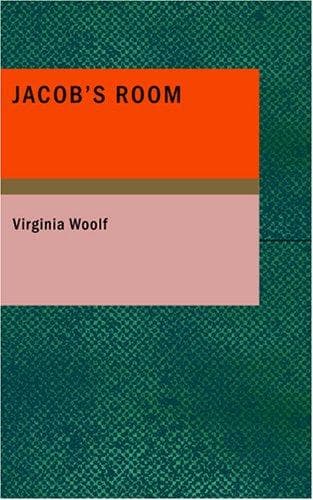
England -- Fiction; Experimental fiction; Psychological fiction; World War, 1914-1918 -- England -- Fiction; Young men -- Fiction
Old Professor Huxtable, performing with the method of a clock his change
of dress, let himself down into his chair; filled his pipe; chose his
paper; crossed his feet; and extracted his glasses. The whole flesh of
his face then fell into folds as if props were removed. Yet strip a
whole seat of an underground railway carriage of its heads and old
Huxtable's head will hold them all. Now, as his eye goes down the print,
what a procession tramps through the corridors of his brain, orderly,
quick-stepping, and reinforced, as the march goes on, by fresh runnels,
till the whole hall, dome, whatever one calls it, is populous with
ideas. Such a muster takes place in no other brain. Yet sometimes there
he'll sit for hours together, gripping the arm of the chair, like a man
holding fast because stranded, and then, just because his corn twinges,
or it may be the gout, what execrations, and, dear me, to hear him talk
of money, taking out his leather purse and grudging even the smallest
silver coin, secretive and suspicious as an old peasant woman with all
her lies. Strange paralysis and constriction--marvellous illumination.
Serene over it all rides the great full brow, and sometimes asleep or in
the quiet spaces of the night you might fancy that on a pillow of stone
he lay triumphant.
Sopwith, meanwhile, advancing with a curious trip from the fire-place,
cut the chocolate cake into segments. Until midnight or later there
would be undergraduates in his room, sometimes as many as twelve,
sometimes three or four; but nobody got up when they went or when they
came; Sopwith went on talking. Talking, talking, talking--as if
everything could be talked--the soul itself slipped through the lips in
thin silver disks which dissolve in young men's minds like silver, like
moonlight. Oh, far away they'd remember it, and deep in dulness gaze
back on it, and come to refresh themselves again.
"Well, I never. That's old Chucky. My dear boy, how's the world treating
you?" And in came poor little Chucky, the unsuccessful provincial,
Stenhouse his real name, but of course Sopwith brought back by using the
other everything, everything, "all I could never be"--yes, though next
day, buying his newspaper and catching the early train, it all seemed to
him childish, absurd; the chocolate cake, the young men; Sopwith summing
things up; no, not all; he would send his son there. He would save every
penny to send his son there.
Public-domain text, read in full here on John Shaqi.
Reviews
Reviews
No reviews yet
Be the first to share your thoughts on this work.
Join the Discussion
Join the discussion
Sign in to leave a comment or review.
Sign InorCreate an account