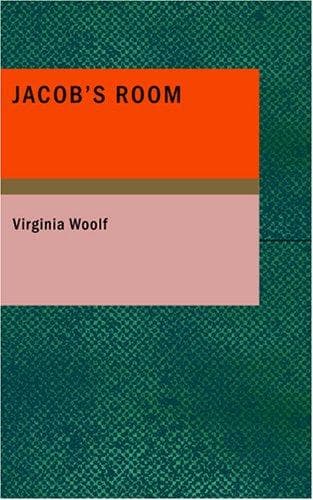
England -- Fiction; Experimental fiction; Psychological fiction; World War, 1914-1918 -- England -- Fiction; Young men -- Fiction
All the lights were coming out round the court, and falling on the
cobbles, picking out dark patches of grass and single daisies. The young
men were now back in their rooms. Heaven knows what they were doing.
What was it that could DROP like that? And leaning down over a foaming
window-box, one stopped another hurrying past, and upstairs they went
and down they went, until a sort of fulness settled on the court, the
hive full of bees, the bees home thick with gold, drowsy, humming,
suddenly vocal; the Moonlight Sonata answered by a waltz.
The Moonlight Sonata tinkled away; the waltz crashed. Although young men
still went in and out, they walked as if keeping engagements. Now and
then there was a thud, as if some heavy piece of furniture had fallen,
unexpectedly, of its own accord, not in the general stir of life after
dinner. One supposed that young men raised their eyes from their books
as the furniture fell. Were they reading? Certainly there was a sense of
concentration in the air. Behind the grey walls sat so many young men,
some undoubtedly reading, magazines, shilling shockers, no doubt; legs,
perhaps, over the arms of chairs; smoking; sprawling over tables, and
writing while their heads went round in a circle as the pen
moved--simple young men, these, who would--but there is no need to think
of them grown old; others eating sweets; here they boxed; and, well, Mr.
Hawkins must have been mad suddenly to throw up his window and bawl:
"Jo--seph! Jo--seph!" and then he ran as hard as ever he could across
the court, while an elderly man, in a green apron, carrying an immense
pile of tin covers, hesitated, balanced, and then went on. But this was
a diversion. There were young men who read, lying in shallow arm-chairs,
holding their books as if they had hold in their hands of something that
would see them through; they being all in a torment, coming from midland
towns, clergymen's sons. Others read Keats. And those long histories in
many volumes--surely some one was now beginning at the beginning in
order to understand the Holy Roman Empire, as one must. That was part of
the concentration, though it would be dangerous on a hot spring
night--dangerous, perhaps, to concentrate too much upon single books,
actual chapters, when at any moment the door opened and Jacob appeared;
or Richard Bonamy, reading Keats no longer, began making long pink
spills from an old newspaper, bending forward, and looking eager and
contented no more, but almost fierce. Why? Only perhaps that Keats died
young--one wants to write poetry too and to love--oh, the brutes! It's
damnably difficult. But, after all, not so difficult if on the next
staircase, in the large room, there are two, three, five young men all
convinced of this--of brutality, that is, and the clear division between
right and wrong. There was a sofa, chairs, a square table, and the
window being open, one could see how they sat--legs issuing here, one
Public-domain text, read in full here on John Shaqi.
Reviews
Reviews
No reviews yet
Be the first to share your thoughts on this work.
Join the Discussion
Join the discussion
Sign in to leave a comment or review.
Sign InorCreate an account