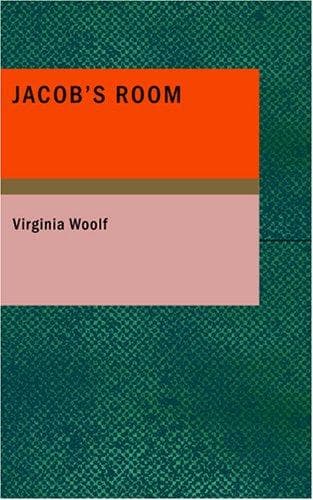
England -- Fiction; Experimental fiction; Psychological fiction; World War, 1914-1918 -- England -- Fiction; Young men -- Fiction
"There's no such thing as silence," he said positively. "I can hear
twenty different sounds on a night like this without counting your
voices."
"Make a bet of it?" said Charlotte.
"Done," said Mr. Erskine. "One, the sea; two, the wind; three, a dog;
four ..."
The others passed on.
"Poor Timothy," said Elsbeth.
"A very fine night," shouted Miss Eliot into Mr. Clutterbuck's ear.
"Like to look at the stars?" said the old man, turning the telescope
towards Elsbeth.
"Doesn't it make you melancholy--looking at the stars?" shouted Miss
Eliot.
"Dear me no, dear me no," Mr. Clutterbuck chuckled when he understood
her. "Why should it make me melancholy? Not for a moment--dear me no."
"Thank you, Timothy, but I'm coming in," said Miss Eliot. "Elsbeth,
here's a shawl."
"I'm coming in," Elsbeth murmured with her eye to the telescope.
"Cassiopeia," she murmured. "Where are you all?" she asked, taking her
eye away from the telescope. "How dark it is!"
Mrs. Durrant sat in the drawing-room by a lamp winding a ball of wool.
Mr. Clutterbuck read the Times. In the distance stood a second lamp, and
round it sat the young ladies, flashing scissors over silver-spangled
stuff for private theatricals. Mr. Wortley read a book.
"Yes; he is perfectly right," said Mrs. Durrant, drawing herself up and
ceasing to wind her wool. And while Mr. Clutterbuck read the rest of
Lord Lansdowne's speech she sat upright, without touching her ball.
"Ah, Mr. Flanders," she said, speaking proudly, as if to Lord Lansdowne
himself. Then she sighed and began to wind her wool again.
"Sit THERE," she said.
Jacob came out from the dark place by the window where he had hovered.
The light poured over him, illuminating every cranny of his skin; but
not a muscle of his face moved as he sat looking out into the garden.
"I want to hear about your voyage," said Mrs. Durrant.
"Yes," he said.
"Twenty years ago we did the same thing."
"Yes," he said. She looked at him sharply.
"He is extraordinarily awkward," she thought, noticing how he fingered
his socks. "Yet so distinguished-looking."
"In those days ..." she resumed, and told him how they had sailed ...
"my husband, who knew a good deal about sailing, for he kept a yacht
before we married" ... and then how rashly they had defied the
fishermen, "almost paid for it with our lives, but so proud of
ourselves!" She flung the hand out that held the ball of wool.
"Shall I hold your wool?" Jacob asked stiffly.
"You do that for your mother," said Mrs. Durrant, looking at him again
keenly, as she transferred the skein. "Yes, it goes much better."
He smiled; but said nothing.
Elsbeth Siddons hovered behind them with something silver on her arm.
"We want," she said.... "I've come ..." she paused.
"Poor Jacob," said Mrs. Durrant, quietly, as if she had known him all
his life. "They're going to make you act in their play."
"How I love you!" said Elsbeth, kneeling beside Mrs. Durrant's chair.
"Give me the wool," said Mrs. Durrant.
Public-domain text, read in full here on John Shaqi.
Reviews
Reviews
No reviews yet
Be the first to share your thoughts on this work.
Join the Discussion
Join the discussion
Sign in to leave a comment or review.
Sign InorCreate an account