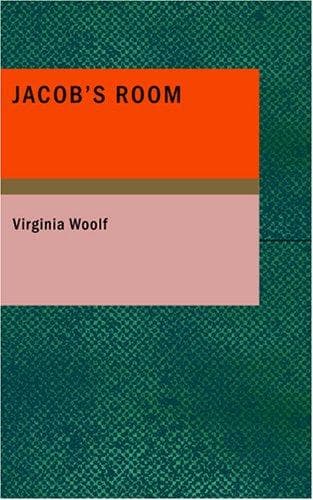
England -- Fiction; Experimental fiction; Psychological fiction; World War, 1914-1918 -- England -- Fiction; Young men -- Fiction
There, under the green shade, with his head bent over white paper, Mr.
Sibley transferred figures to folios, and upon each desk you observe,
like provender, a bunch of papers, the day's nutriment, slowly consumed
by the industrious pen. Innumerable overcoats of the quality prescribed
hung empty all day in the corridors, but as the clock struck six each
was exactly filled, and the little figures, split apart into trousers or
moulded into a single thickness, jerked rapidly with angular forward
motion along the pavement; then dropped into darkness. Beneath the
pavement, sunk in the earth, hollow drains lined with yellow light for
ever conveyed them this way and that, and large letters upon enamel
plates represented in the underworld the parks, squares, and circuses of
the upper. "Marble Arch--Shepherd's Bush"--to the majority the Arch and
the Bush are eternally white letters upon a blue ground. Only at one
point--it may be Acton, Holloway, Kensal Rise, Caledonian Road--does the
name mean shops where you buy things, and houses, in one of which, down
to the right, where the pollard trees grow out of the paving stones,
there is a square curtained window, and a bedroom.
Long past sunset an old blind woman sat on a camp-stool with her back to
the stone wall of the Union of London and Smith's Bank, clasping a brown
mongrel tight in her arms and singing out loud, not for coppers, no,
from the depths of her gay wild heart--her sinful, tanned heart--for the
child who fetches her is the fruit of sin, and should have been in bed,
curtained, asleep, instead of hearing in the lamplight her mother's wild
song, where she sits against the Bank, singing not for coppers, with her
dog against her breast.
Home they went. The grey church spires received them; the hoary city,
old, sinful, and majestic. One behind another, round or pointed,
piercing the sky or massing themselves, like sailing ships, like granite
cliffs, spires and offices, wharves and factories crowd the bank;
eternally the pilgrims trudge; barges rest in mid stream heavy laden; as
some believe, the city loves her prostitutes.
But few, it seems, are admitted to that degree. Of all the carriages
that leave the arch of the Opera House, not one turns eastward, and when
the little thief is caught in the empty market-place no one in
black-and-white or rose-coloured evening dress blocks the way by pausing
with a hand upon the carriage door to help or condemn--though Lady
Charles, to do her justice, sighs sadly as she ascends her staircase,
takes down Thomas a Kempis, and does not sleep till her mind has lost
itself tunnelling into the complexity of things. "Why? Why? Why?" she
sighs. On the whole it's best to walk back from the Opera House. Fatigue
is the safest sleeping draught.
Public-domain text, read in full here on John Shaqi.
Reviews
Reviews
No reviews yet
Be the first to share your thoughts on this work.
Join the Discussion
Join the discussion
Sign in to leave a comment or review.
Sign InorCreate an account