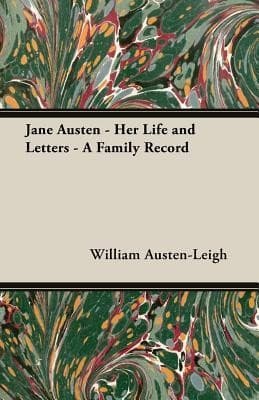
Jane Austen, Her Life and Letters: A Family Record — John Shaqi
Jane Austen, Her Life and Letters: A Family RecordAusten-Leigh, William
General
Jane Austen, Her Life and Letters: A Family Record
Austen-Leigh, William
Austen, Jane, 1775-1817; Austen, Jane, 1775-1817 -- Family; Novelists, English -- 19th century -- Family relationships
Steventon was not the only preferment in the neighbourhood that George
Austen was to hold. His kind uncle Francis, who had helped him in his
schooling, was anxious to do something more for him. He would have
liked, it is said, to have put him into the comfortable living of West
Wickham in Kent, which was in the gift of his wife; but he considered
that another nephew, the son of a brother older than George's father,
had a prior claim. Francis, however, did the best thing he could by
buying the next presentations of two parishes near Steventon--namely,
Ashe and Deane--that his nephew might have whichever fell vacant first.
The chances of an early vacancy at Ashe, where Dr. Russell--the
grandfather of Mary Russell Mitford--had been established since 1729,
must have seemed the greater; but fate decided otherwise. Dr. Russell
lived till 1783, and it was Deane that first fell vacant, in 1773.
The writer of the _Memoir_, who was under the impression that George
Austen became Rector of both Steventon and Deane in 1764, states that
the Austens began their married life in the parsonage at Deane, and did
not move to Steventon till 1771, seven years later. This cannot be quite
correct, because we have letters of George Austen dated from Steventon
in 1770; nor is it quite easy to understand why Mr. Austen should have
lived in some one else's Rectory in preference to his own, unless we
conceive that the Rector of Deane was non-resident, and that George
Austen did duty at Deane and rented the parsonage while his own was
under repair. It seems impossible now to unravel this skein. The story
of the move to Steventon, in 1771, is connected with a statement that
the road was then a mere cart-track, so cut up by deep ruts as to be
impassable for a light carriage, and that Mrs. Austen (who was not then
in good health) performed the short journey on a feather-bed, placed
upon some soft articles of furniture in the waggon which held their
household goods. This story is too circumstantial to be without
foundation, nor is there any reason to doubt the badness of a country
lane; but the particular family-flitting referred to must be left
uncertain.
Public-domain text, read in full here on John Shaqi.
Reviews
Reviews
No reviews yet
Be the first to share your thoughts on this work.
Join the Discussion
Join the discussion
Sign in to leave a comment or review.
Sign InorCreate an account