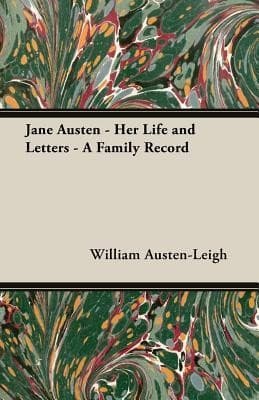
Jane Austen, Her Life and Letters: A Family RecordAusten-Leigh, William
General
Jane Austen, Her Life and Letters: A Family Record
Austen-Leigh, William
Austen, Jane, 1775-1817; Austen, Jane, 1775-1817 -- Family; Novelists, English -- 19th century -- Family relationships
It seems likely that the Hancocks sailed with Warren Hastings for
England in the _Medway_ in 1764-5; but, whenever they went, we learn
from Hancock's letters that the journey home cost them the large sum of
L1500. He (Hancock) no doubt thought that he had amassed a sufficient
fortune--perhaps from trading, or from private practice, for it can
hardly have been from his official income--in India to enable him to end
his days comfortably at home. But either his Indian investments turned
out badly, or he discovered that living in good style in England cost
much more than he had anticipated; and after three years he found
himself under the disagreeable necessity of a second residence in
Bengal, in order to secure a fresh provision for his wife and daughter.
So low, indeed, were his finances at the time, that he was forced to
borrow money from Hastings to pay for his passage out. He reached
Calcutta in 1769, but did not prosper on this second visit. His health
was bad, his trading ventures turned out amiss, and there were perpetual
difficulties about remitting money home to Philadelphia. Hastings
evidently foresaw how matters would end, and with his wonted generosity
gave a sum amounting at first to L5000, and increased later to L10,000,
in trust for Hancock and his wife during their lives, and, on the death
of the survivor, to Betsy.
Mr. Hancock himself died in November 1775, 'universally beloved and
deeply regretted' (in the words of a young man whom he had befriended),
'the patron of the widow and the fatherless.'[26] He seems indeed to
have been a man of affectionate and anxious disposition, strongly
attached to his wife and daughter; but the last part of his life was
passed away from them amid difficulties and disappointments, and his
spirits were hardly high enough to enable him to bear up against unequal
fortune. He alludes in his letters, with expressions of regard, to his
brother-in-law, George Austen; but characteristically deplores his
growing family, thinking that he will not be able to put them out in the
world--a difficulty which did not eventually prove to be insuperable.
Public-domain text, read in full here on John Shaqi.
Reviews
Reviews
No reviews yet
Be the first to share your thoughts on this work.
Join the Discussion
Join the discussion
Sign in to leave a comment or review.
Sign InorCreate an account