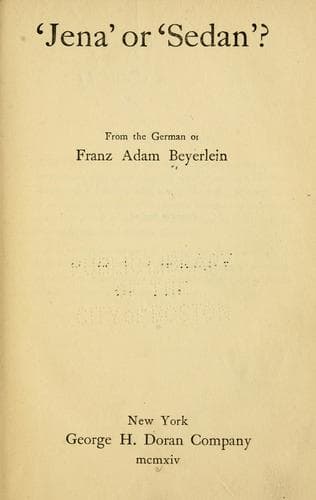
German fiction -- Translations into English; Germany. Heer -- Fiction
Friedrich August Vogt and his twin sister had been born in 1840, the
little-prized children of an unmarried mother, who had vanished one day
and left no trace. Probably she had died in a ditch. The children were
taken into an orphanage, on leaving which the girl had gone to service,
while the boy had become a soldier and climbed the ladder of promotion
to the rank of sergeant, receiving the silver medal for bravery, and at
St. Privat the iron cross. In command over others he proved strict and
just; and though assuming an outwardly harsh, bearish manner, he looked
after those who were under him with indefatigable and almost fatherly
care. His whole endeavour throughout those fifteen years had been to
stand blameless, not only in the eyes of his superiors, but, what was
more important still, in his own.
His comrades disliked the quiet, serious man, and Vogt himself was
just as little drawn to their frivolous ways; nor had women any
attraction for him. He was sufficient unto himself, and looked neither
for friend nor wife; but though he had grown up independent of love, he
yet craved to win for himself some modest amount of grateful
recognition within the narrow limits of the service, and he felt
richly rewarded if a reservist when bidding good-bye gripped his
hand and muttered a few clumsy words of gratitude. Of such were many
good-for-nothings whom he had saved from dangerous follies and their
inevitable punishment, not by rough words, but by kindly counsel. When
he eventually doffed his uniform he had nothing with which to reproach
himself; no neglect and no overstepping of duty, no injustice and no
improper leniency; he had good cause for self-satisfaction.
He was given the post of turnpike-keeper in recognition of his good
service, and could then carry out a long-cherished wish: he took his
sister to live with him. But he did not long enjoy her companionship.
She left him after but a few years, during which she succeeded--not
without difficulty--in bringing some sort of brightness into the life
of her grave brother. She foresaw that he would in all probability
lapse into deeper and deeper gloom when she was no longer there; and on
her deathbed she joined his hand with that of a girl some years younger
than herself, with whom she had struck up a firm friendship. They
respected the wishes of the dead, married, and lived together happily,
thinking themselves the most fortunate of mortals when a son was born
to them. But August Vogt was doomed to loneliness, for his wife died
when the boy was just old enough to go to school.
Public-domain text, read in full here on John Shaqi.
Reviews
Reviews
No reviews yet
Be the first to share your thoughts on this work.
Join the Discussion
Join the discussion
Sign in to leave a comment or review.
Sign InorCreate an account