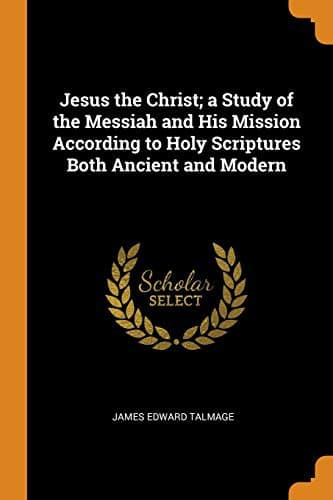
Jesus the Christ: A Study of the Messiah and His Mission According to Holy; Scriptures Both Ancient and ModernTalmage, James E. (James Edward)
Religion
Jesus the Christ: A Study of the Messiah and His Mission According to Holy; Scriptures Both Ancient and Modern
Talmage, James E. (James Edward)
Christian biography -- Palestine; Jesus Christ -- Biography; Jesus Christ -- Mormon interpretations
Of old it had been said: "Love thy neighbour, and hate thine
enemy";[529] but the Lord now taught: "Love your enemies, bless them
that curse you, do good to them that hate you, and pray for them which
despitefully use you, and persecute you." This was a new doctrine. Never
before had Israel been required to love their foes. Friendship for
enemies had found no place in the Mosaic code: indeed the people had
grown to look upon Israel's enemies as God's enemies; and now Jesus
required that tolerance, mercy, and even love be meted out to such! He
supplemented the requirement by an explanation--through the course
indicated by Him men may become children of God, like unto their
Heavenly Father to the extent of their obedience; for the Father is
kind, long-suffering and tolerant, causing His sun to shine on the evil
and on the good, and sending rain for the sustenance of both just and
unjust.[530] And further, what excellence has the man who gives only as
he receives, acknowledges only those who salute him with respect, loves
only as he is loved? Even the publicans[531] did that much. Of the
disciples of Christ much more was expected. The admonition closing this
division of the discourse is an effective and comprehensive summary of
all that had preceded: "_Be ye therefore perfect, even as your Father
which is in heaven is perfect._"[532]
SINCERITY OF PURPOSE.[533]
In the matter of alms-giving the Master warned against, and
inferentially denounced, ostentation and hypocritical display. To give
to the needy is praiseworthy; but to give for the purpose of winning the
praise of men is rank hypocrisy. The tossing of alms to a beggar, the
pouring of offerings into the temple treasure chests, to be seen of
men,[534] and similar displays of affected liberality, were fashionable
among certain classes in the time of Christ; and the same spirit is
manifest today. Some there be now who cause a trumpet to be sounded,
through the columns of the press perchance, or by other means of
publicity, to call attention to their giving, that they may have glory
of men--to win political favor, to increase their trade or influence, to
get what in their estimation is worth more than that from which they
part. With logical incisiveness the Master demonstrated that such givers
have their reward. They have received what they bid for; what more can
such men demand or consistently expect? _"But" said the Lord, "when thou
doest alms, let not thy left hand know what thy right hand doeth: That
thine alms may be in secret: and thy Father which seeth in secret
himself shall reward thee openly!"_
Public-domain text, read in full here on John Shaqi.
Reviews
Reviews
No reviews yet
Be the first to share your thoughts on this work.
Elsewhere in the archive
Join the Discussion
Join the discussion
Sign in to leave a comment or review.
Sign InorCreate an account