“I don’t think we’d better say anything to Colonel Clark until it’s time
to go,” Jim cautioned. “He might think of an excuse to keep us from
going with him.”
“All right, Jim. Mum’s the word, but I’ll manage to get the rifle.”
By nightfall Captain Charleville had raised his company of Kaskaskia
volunteers. The women were so enthusiastic about the undertaking that
they worked furiously for the next two days, making flags of various
colors and designs. When they were presented to Colonel Clark, he didn’t
know what he would do with so many flags. But he thanked the ladies
gravely and packed their gift with the army supplies.
On the third of February Captain McCarty arrived from Cahokia with his
volunteers. That same day the men finished work on the riverboat, which
Clark had named the _Willing_. They had made it into a warship equipped
with armament of two four-pounders and four swivels. It required a crew
of forty men to man, and Clark put Captain John Rogers in charge of it.
He ordered Rogers to go down the Kaskaskia and Mississippi Rivers to the
Ohio and ascend the Ohio and Wabash Rivers; then he was to take his
station thirty miles below Vincennes and wait there for further orders.
The next day Captain Rogers and his crew set out on the warship with
supplies, stores and ammunition.
At three o’clock in the afternoon of February fifth, Clark’s army was
ready to march. Jim had had to talk long and hard to get Clark’s
permission to go with the troops; he had made no mention of Willie. But
Willie stood beside Jim, carrying his father’s rifle, which protruded
above his head.
As the army, one hundred-thirty men strong, stood waiting, Father
Gibault made a little talk to the men and gave them his blessing and
absolution. All the women and men not able to go with Clark were on hand
to bid the troops good-bye and wish them Godspeed.
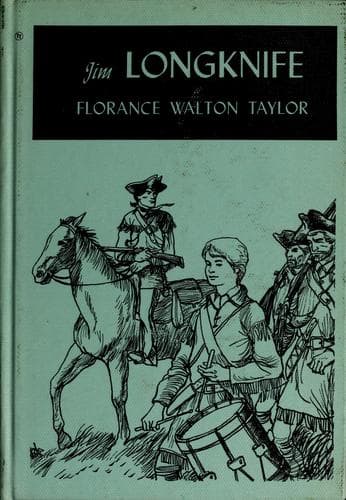
George Rogers Clark rode in front on a magnificent stallion, followed by
his officers, also mounted. Jim Long-Knife Hudson, wearing an
ill-fitting buckskin suit and beating his drum, stepped out proudly.
Willie Watson dropped back to the rear of the second company, fearing
Colonel Clark would see him and send him home because of his age and
size.
The rest of the men, clad in worn buckskin trousers and hunting shirts,
swung out jauntily, their heads held high. Some carried rifles and some
tomahawks, since there weren’t enough rifles for everyone. A motley
array—Clark’s pioneer army, and at the same time a magnificent column of
spirited soldiers.
The whole of the flat Illinois country between Kaskaskia and Vincennes
was freezing water and half-frozen mud. Two hundred and forty miles lay
between the army and Vincennes, but the men bravely started out. By
nightfall, however, they had covered only three miles. It was rainy and
drizzly, so they spent an uncomfortable night without tents or shelter
of any kind. The next day they remained in camp.
Public-domain text, read in full here on John Shaqi.
Reviews
Reviews
No reviews yet
Be the first to share your thoughts on this work.
Join the Discussion
Join the discussion
Sign in to leave a comment or review.
Sign InorCreate an account