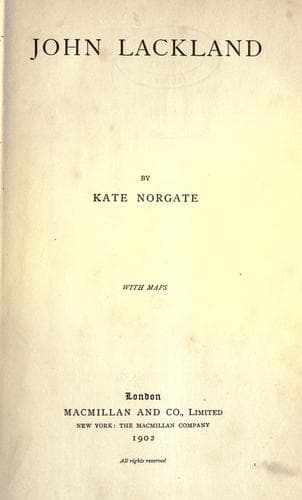
Great Britain -- History -- John, 1199-1216; Great Britain -- Kings and rulers -- Biography; John, King of England, 1167-1216
The chroniclers of the time speak of that day’s ceremony in a
matter-of-course way which implies that there was nothing remarkable
about it. “John,” says one, “was peaceably received by the great men
of all England, and was immediately crowned by Archbishop Hubert of
Canterbury at Westminster on Ascension Day, amid a great array of
the citizens.”[266] Sixteen prelates besides Hubert, ten earls and
“many barons” were present.[267] The coronation oath was administered
to John in almost the same words as it had been to Richard, and
with the same adjuration not to take it without a full purpose of
keeping it, to which John made the proper reply.[268] Of the other
details of the ceremony there is no description; only one incident at
its outset and one omission at its close are noted by contemporary
writers.[269] The first was merely a formal protest made by Bishop
Philip of Durham that the coronation ought not to take place in the
absence of his metropolitan, the archbishop of York.[270] The second
was an intentional and significant omission on the part of the newly
crowned king himself. It was customary for every Christian sovereign,
after the crown had been placed on his head, to seal the vows which he
had just made by receiving the Holy Communion. John, however, did not
communicate.[271]
Next day the new king received in person the homage of the barons.[272]
On this side of the sea, only Wales and Scotland remained to be
secured. Of Wales we hear nothing at the moment. Scotland had taken the
initiative immediately after Richard’s death; King William the Lion had
at once despatched a message to John, offering him his liege homage
and fealty, on condition that Northumberland and Cumberland should be
given back to the Scottish Crown. The English primate, Marshal and
justiciar, knowing the difficulties with which John was beset on the
other side of the Channel, probably feared that he might be tempted to
purchase William’s support at William’s own price; they intercepted the
messenger, and sent word to the Scot king, by his brother Earl David
of Huntingdon, that he must “wait patiently” till John should reach
England. John himself--to whom they apparently reported what they had
done--sent word to William that he would “satisfy him concerning all
his demands” on his arrival, if the Scot king would keep the peace till
then.[273] Immediately after his coronation John despatched two envoys
to summon William to his court and conduct him safely thither. After
they had started, there came to the English king three envoys from
Scotland with a repetition of William’s former message; but this time a
threat was added; if William’s terms were not accepted “he would regain
all that he was entitled to, if he could.” John answered quietly: “When
your lord, my very dear cousin, shall come to me, I will do to him
whatsoever is right concerning these things and other requests of his”;
and he bade the bishop of Durham go to meet the Scot king, “hoping the
Public-domain text, read in full here on John Shaqi.
Reviews
Reviews
No reviews yet
Be the first to share your thoughts on this work.
Elsewhere in the archive
Join the Discussion
Join the discussion
Sign in to leave a comment or review.
Sign InorCreate an account