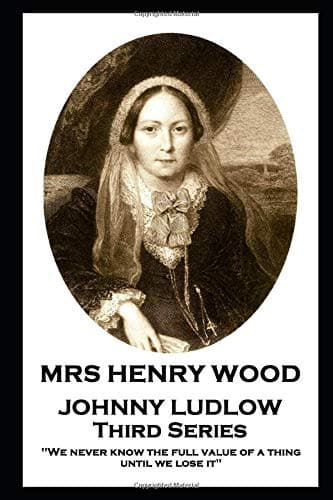
England -- Social life and customs -- 19th century -- Fiction; Short stories, English
All this, put together, certainly did not tend to show that Mr. Marcus
Allen had anything to do with the disappearance. Jessy had now and
then received letters from her former schoolfellows addressed to the
post-office--for her sisters, who considered her but a child, had an
inconvenient habit of looking over her shoulder while she read them. The
whole family, John Drench included, were up to their ears in agony: they
did not know in what direction to look for her; were just in that state
of mind when straws are caught at. Tod, knowing it could do no harm,
told Miss Abigail about the kiss in the coppice. Miss Abigail quite
laughed at it: kisses under the mistletoe were as common as blackberries
with us, and just as innocent. She wrote to Aberystwith, asking
questions about Marcus Allen, especially as to where he might be found.
In answer, Mrs. Allen said she had not heard from him since he left
Aberystwith, early in December, but had no doubt he was in London at his
own home: she did not know exactly where that was, except that it was
"somewhere at the West End."
This letter was not more satisfactory than anything else. Everything
seemed vague and doubtful. Miss Page read it to her father when he was
in bed: Susan had just brought up his breakfast, and he sat up with the
tray before him, his face nearly as white as the pillow behind him. They
could not help seeing how ill and how shrunken he looked: Jessy's loss
had told upon him.
"I think, father, I had better go to London, and see if anything's to be
learnt there," said Miss Page. "We cannot live on, in this suspense."
"Ay; best go," answered he, "_I_ can't live in it, either. I've had
another sleepless night: and I wish that I was strong to travel. I
should have been away long ago searching for the child----."
"You see, father, we don't know where to seek her; we've no clue,"
interrupted Abigail.
"I'd have gone from place to place till I found her. But now, I'll tell
ye, Abigail, where you must go first--the thought has been in my mind
all night. And that is to Madame Caron's."
"To Madame Caron's!" echoed both the sisters at once. "Madame Caron's!"
"Don't either of you remember how your mother used to talk of her? She
was Ann Dicker. She knows a sight of great folks now--and it may be that
Jessy's gone to her. Bond Street, or somewhere near to it, is where she
lives."
In truth they had almost forgotten the person mentioned. Madame Caron
had once been plain Ann Dicker, of Church Dykely, intimate with William
Page and his wife. She went to London when a young woman to learn the
millinery and dress-making; married a Frenchman, and rose by degrees to
be a fashionable court-milliner. It struck Mr. Page, during the past
night-watch, that Jessy might have applied to Madame Caron to help her
in getting a place as lady's-maid.
Public-domain text, read in full here on John Shaqi.
Reviews
Reviews
No reviews yet
Be the first to share your thoughts on this work.
Join the Discussion
Join the discussion
Sign in to leave a comment or review.
Sign InorCreate an account