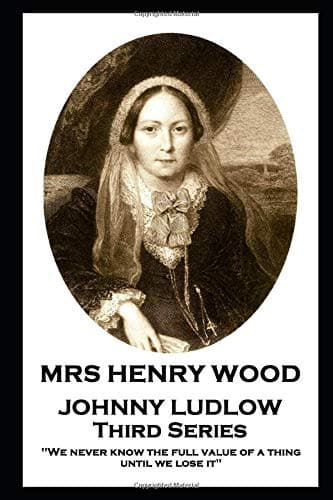
England -- Social life and customs -- 19th century -- Fiction; Short stories, English
There was not a friendly hole in the floor for Helen to drop through.
She escaped by the door to hide herself and her hot cheeks. For this was
neither more nor less than a love-letter from the curate, and Sir John
had taken it to the window to read it in the stronger light.
"Bless my heart and mind!" cried he when he had mastered its contents,
just such an exclamation as the Squire would have made. "He--he--I
believe the fellow means to make love to her! What a false-hearted
parson he must be! Come here, Todhetley."
To see the two old heads poring over the letter together through their
spectacles was something good, Tod said, when he told me all this later.
It was just a love-letter and nothing less, but without a word of love
in it. But not a bad love-letter of its kind; rather a sensible one.
After telling Helen about the tracasserie in the parish school (which
must have afforded him just the excuse for writing that he may have
wanted), the curate went on to say a little bit about their mutual
"friendship," and finished up by begging Helen to allow him to speak
to Sir John and Lady Whitney, for he could not bear to think that by
keeping silent they were deceiving them. "As honourable a letter in
its way as you could wish to hear read," observed Tod; for Sir John
and the Squire had read it aloud between them for the benefit of the
dining-room.
"This comes of having grown-up daughters," bewailed poor Sir John.
"Leafchild ought to be put in the pillory. And where's Helen got to?
Where is that audacious girl?"
Poor Helen caught it hot and strong--Sir John demanding of her, for one
thing, whether she had not had enough of encouraging disreputable young
sparks with that Richard Foliott. Poor Helen sobbed and hid her head,
and finally took courage to say that Mr. Leafchild was a saint on
earth--not to be as much as named in the same sentence with Richard
Foliott. And when I got home at night, everybody, from Helen downwards,
was in the dumps, and Sir John had gone home to make mincemeat of the
curate.
Buttermead was one of those straggling parishes that are often found in
rural districts. Whitney Hall was situated in it, also the small village
of Whitney, also that famous school of ours, Dr. Frost's, and there was
a sprinkling of other good houses. Some farm homesteads lay scattered
about; and the village boasted of a street and a half.
Public-domain text, read in full here on John Shaqi.
Reviews
Reviews
No reviews yet
Be the first to share your thoughts on this work.
Elsewhere in the archive
Join the Discussion
Join the discussion
Sign in to leave a comment or review.
Sign InorCreate an account