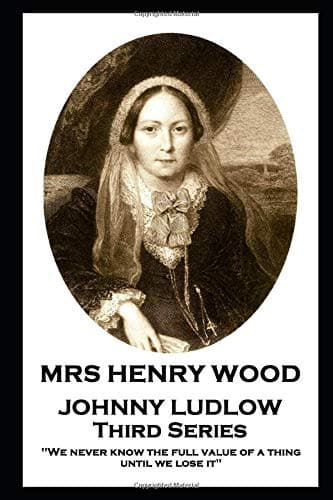
England -- Social life and customs -- 19th century -- Fiction; Short stories, English
The incumbent of Buttermead, or Whitney, was the Reverend Matthew
Singleton: his present curate was Charles Leafchild. Mr. Leafchild,
though eight-and-twenty years of age, was only now ordained deacon, and
this year was his first in the ministry. At eighteen he had gone out to
the West Indies, a post having been found for him there. He did not go
by choice. Being a steady-minded young fellow, religiously inclined, he
had always wished to be a parson; but his father, Dr. Leafchild, a great
light among Church dignitaries, and canon residentiary of a cathedral in
the North, had set his face against the wish. The eldest son was a
clergyman, and of his preferment Dr. Leafchild could take tolerable
care, but he did not know that he could do much in that way for his
younger sons, and so Charles's hopes had to go to the wall. Spiritual
earnestness, however, at length made itself heard within him to
some purpose; and he resolved, come what might, that he would quit
money-making for piety. The West Indian climate did not agree with
him; he had to leave it for home, and then it was that he made the
change. "You would have been rich in time had you stuck to your post,"
remonstrated the Reverend Doctor to him: "now you may be nothing but a
curate all your life." "True, father," was the answer, "but I shall hope
to do my duty as one." So Charles Leafchild made himself into a parson,
and here he was at Buttermead, reading through his first year, partially
tabooed by his family, and especially by that flourishing divine, the
head of it.
He was a good-looking young man, as men go. Rather tall than not, with
a pale, calm face, brown hair that he wore long, and mild brown eyes
that had no end of earnestness in their depths. A more self-denying man
could not be found; though as a rule young men are not famous for great
self-denial. The small stipend given by Mr. Singleton had to suffice for
all his wants. Leafchild had never said what this stipend was; except
that he admitted one day it was not _more_ than seventy pounds: how much
less than that, he did not state.
Just a few roods out of the village stood a small dwelling called
Marigold Cottage. A tidy woman named Bean lived in it with her
two daughters, one of whom was the paid mistress of the national
girls'-school. Mr. Leafchild lodged here, as the late curate had before
him, occupying the spare sitting-room and bedroom. And if Mrs. Bean was
to be believed--and she had been a veracious woman all her life--three
days out of the seven, at least, Mr. Leafchild went without meat at
his dinner, having given it away to some sick or poor creature, who
wanted it, he considered, more than he did. A self-denying, earnest,
gentle-minded man; that's what he was: and perhaps it may be forgiven
to Helen Whitney that she fell in love with him.
Public-domain text, read in full here on John Shaqi.
Reviews
Reviews
No reviews yet
Be the first to share your thoughts on this work.
Elsewhere in the archive
Join the Discussion
Join the discussion
Sign in to leave a comment or review.
Sign InorCreate an account