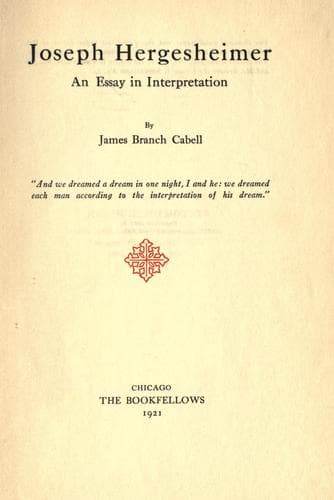
Joseph Hergesheimer, an essay in interpretationCabell, James Branch
General
Joseph Hergesheimer, an essay in interpretation
Cabell, James Branch
Hergesheimer, Joseph, 1880-1954 -- Criticism and interpretation
Yet none of these circumstances, either, is the point of the apologue,
because in all save one detail the comedy has been abraded into
pointlessness by over-constant repetition; and is, of course, being
futilely performed at this moment in one prefers not to reflect how
many thousand homes. The leading rôle, though, is too unprofitable
and irksome for any quite sane person to persist in enacting it for
fourteen years. This Joseph Hergesheimer did: and that is the fable’s
significant point.
TWO
Yes, it is the boy’s illogical pertinacity that is the fable’s point,
because it so plausibly explains why nearly all the men in Mr.
Hergesheimer’s books are hag-ridden by one or another sole desire
which spurs them toward a definite goal at every instant of their
mimic lives. These men but variously reflect, I take it, that younger
Hergesheimer’s “will to write,” that unconquerable will. To Mr.
Hergesheimer, even to-day, it probably seems natural that a man’s whole
living should be devoted to the attaining of one desire quite clearly
perceived, because his own life has been thus dedicated. The more
shrewd mass of practical persons that go about in flesh are otherwise;
and comfortably fritter through the day, with no larger objective at
any time in mind than the catching of a car, the rounding off of a
business transaction, the keeping of an engagement for luncheon, and
the vesperal attendance to some unmental form of recreation, with one
small interest displacing another in endless succession, until bedtime
arrives and the undertaker tucks them in.
Public-domain text, read in full here on John Shaqi.
Reviews
Reviews
No reviews yet
Be the first to share your thoughts on this work.
Join the Discussion
Join the discussion
Sign in to leave a comment or review.
Sign InorCreate an account