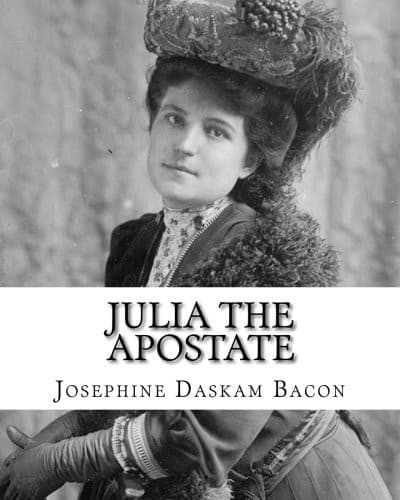
Love stories, American; Middle-aged persons -- Fiction
Miss Trueman, who possessed the characteristic veneration of the bred
and born New Englander for his native or imported school-ma'am, resented
persistently their somewhat patronizing attitude toward the profession
second only to the ministry in her stanch respect. A little of the
simple grandeur of those childhood days when “the teacher boarded with
them” clung with the ineradicable force of habit to her mind, and she
could not understand their restive attitude at “the fine positions as
teachers Hattie's girls have got.”
“I'm sure you make more money than that Miss Seymour that gets her own
meals in her room--she said so herself.”
“Oh, well, there are other things to be considered, Aunt Ju; and,
anyway, she's a real bohemian, Polly Seymour. There's a fascination in
it.”
“There's no fascination in being hungry that I can see, and she admitted
that, L--Elise,” Miss Trueman insisted severely. “I don't understand how
she could have done it--I would have died first. And she seemed to think
it was a great joke to have her friends give her a dinner--I think it
was terrible.”
“Why, Aunt Jule, how ridiculous! We were delighted to do it--it was
perfectly dear of her to let us, too. And think of the people we met
there--Rawlins and Mr. Ware! You don't mind being poor if such men will
come just out of interest in you, I tell you. Do you remember, Elise,
how Mr. Rawlins called her 'little girl'? Mr. Ware lets her use his
models whenever she likes, too,” Carolyn added respectfully.
“Oh, she's bound to arrive!” Elise agreed.
Aunt Ju-ju sniffed uncontrolledly.
“I should hope she'd arrive at the point where she could buy her own
dinners,” she remarked. “To be beholden for your bread”...
Here were two points of view as little likely to coincide as the
parallel lines of science, and at some such stage as this the
discussions were wont to cease.
To-day the apartment was swept and garnished for a social function
long planned by the nieces. Carnations leaned from tall glass vases,
intricate little cakes jostled carefully piled sandwiches, and a huge
brass samovar, borrowed for the occasion, gave dignity to the small
parlor. Miss Trueman had learned by now the unwritten law that prevented
the various objects in the once proudly segregated “drawing-room set”
from association with each other, and made no attempt to correct their
intentional isolation. The samovar she refused utterly to meddle with,
assuring them that she would as soon think of running a locomotive.
As the guests began to arrive Miss Trueman found herself regarding them
even more critically than usual; an argumentative spirit rose in her,
and her calm contradiction of Mrs. Ranger, who discussed with great
subtlety the notable advantages--even from the artistic point of
view--of the approaching spring when experienced in the city, in
comparison with that be-rhymed season's vaunted country beauties,
startled more than one person.
Public-domain text, read in full here on John Shaqi.
Reviews
Reviews
No reviews yet
Be the first to share your thoughts on this work.
Join the Discussion
Join the discussion
Sign in to leave a comment or review.
Sign InorCreate an account