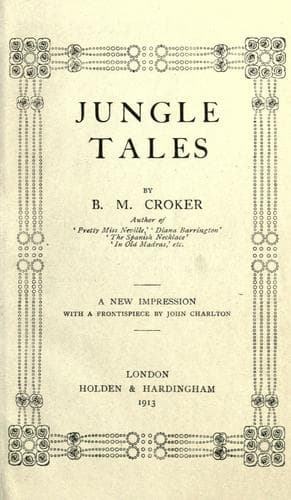
British -- India -- Fiction; India -- History -- British occupation, 1765-1947 -- Fiction; Short stories
Then Naim Sing arose, tall and erect, a dignified and impressive
figure, carrying his two-score years with grace, and made a most
powerful and thrilling appeal in his own defence--an appeal for an
innocent man, who was about to be banished for ever from his home
and country, because, forsooth, his features had the ill fortune to
resemble those of a dead murderer!
During his speech, one could almost hear a leaf fall outside the court.
The previous quiet had now changed to what resembled a hush of awe.
The audience within and without--the windows and doors stood wide, and
exhibited an immense sea of human heads--hung with avidity on each
sonorous syllable. Not a gesture, not a glance was lost. So stirring
and impassioned was his eloquence, that every heart was shaken, and
many were moved to tears. But the condemned man pleaded his cause in
vain; in fact, his silver tongue afforded but yet another proof of his
identity. His fate was sealed. Fearing a public tumult, he was removed
secretly ere dawn, marched down the mountain sides for the last time,
despatched to the Andamans,--and there he died.
So ended a trial that lasted many days, that was more discussed and
fought over than any law-suit of the period; a case which is fiercely
argued and hotly debated even to the present hour; a cause which has
divided scores of households and separated chief friends. For there are
some who declare that the real Naim Sing expired in Moulmein jail khana
nineteen years previously, and that the vengeance of Rateeban demanded
two lives for one; also that the heavily bribed son of Gunesheb had
borne black false witness, his father having died in his own house; and
that, of a truth, an innocent man was condemned to transportation and
death: but there be some who think otherwise.
AN OUTCAST OF THE PEOPLE.
“Pushed by a power we see not, and struck by a hand unknown,
We pray to the trees for shelter, and press our lips to a stone.”
Sir A. Lyall.
Jasoda was seventeen years of age, and fair as a sunrise on the snows.
She dwelt in a district not far from the Goomptee river, among the
wheat and poppy fields that are scattered over Rohilcund.
Public-domain text, read in full here on John Shaqi.
Reviews
Reviews
No reviews yet
Be the first to share your thoughts on this work.
Join the Discussion
Join the discussion
Sign in to leave a comment or review.
Sign InorCreate an account