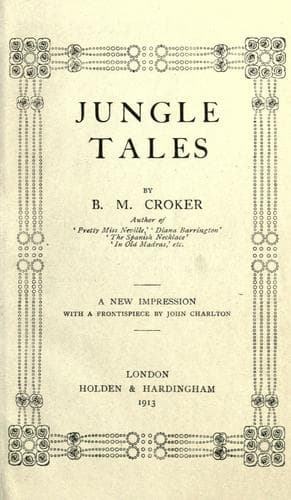
British -- India -- Fiction; India -- History -- British occupation, 1765-1947 -- Fiction; Short stories
The next day he went to his brother’s abode and sold the old charpoy,
reaping-hook, and house for the sum of seven rupees; but he could
neither sell nor kill the cat--she sat serenely aloft in a neem tree,
far out of his reach. Presently she discovered her old owners, or they
discovered her; they hid her secretly in their miserable shelter, and
begged a little milk in the village. Alas! she was their only friend.
Their cousins--four sallow, ugly children, two of whom had inherited
their parent’s violent squint, and all of whom were laden with anklets
and bangles, and a vast sense of their own importance--condescended
to come and patronize the two wicked beggars who lived in the old
goat-shed in a corner of the enclosure. They experienced an intense
and novel delight in patronizing, teasing, pinching, and threatening
these little pariahs, who were better fun, and afforded more scope
for amusement, than any of their usual games, and their sense of
their own superiority swelled to enormous proportions. They visited
the unfortunates at all hours; but the cat knew their voices, and
hid hastily among the thatch. Bazaar cats are wonderfully active and
cunning, they are also marvellous thieves, and the cat throve.
Presently Zālim Sing’s wife discovered that Girunda was old enough to
be of use. She set him to do the work of two servants, or one pony. He
had to draw water and carry it home from the well, to grind corn, to
cut fodder, whilst his little sister cried herself to sleep alone,
for she dared not leave the cat, lest her ever-prying cousins should
discover it and throw it down the well. Certainly its appearance was
against it; it was lean and long and dirty-white, with a thin rat tail;
and a sharp-pointed face--a pure village type--hungry, and careless of
its appearance, a merciless mouser, but a faithful adherent.
Poor Girunda now toiled early and late, he received nought but blows,
abuse, and the coarsest fare. Much of his utility was unknown to his
uncle--who was frequently from home--but who scowled every time that
his glance fell upon him.
Public-domain text, read in full here on John Shaqi.
Reviews
Reviews
No reviews yet
Be the first to share your thoughts on this work.
Elsewhere in the archive
Join the Discussion
Join the discussion
Sign in to leave a comment or review.
Sign InorCreate an account