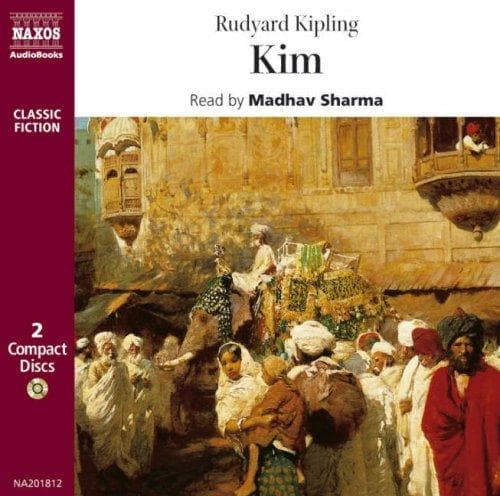
Adventure stories; Boys -- Fiction; India -- Fiction; Irish -- India -- Fiction; Lamas -- Fiction; Orphans -- Fiction; Spy stories
“And I will see that thou art well taught,” said Lurgan Sahib, still
speaking in the vernacular, “for except my boy here—it was foolish of
him to buy so much white arsenic when, if he had asked, I could have
given it—except my boy here I have not in a long time met with one
better worth teaching. And there are ten days more ere thou canst
return to Lucknao where they teach nothing—at the long price. We shall,
I think, be friends.”
They were a most mad ten days, but Kim enjoyed himself too much to
reflect on their craziness. In the morning they played the Jewel
Game—sometimes with veritable stones, sometimes with piles of swords
and daggers, sometimes with photo-graphs of natives. Through the
afternoons he and the Hindu boy would mount guard in the shop, sitting
dumb behind a carpet-bale or a screen and watching Mr Lurgan’s many and
very curious visitors. There were small Rajahs, escorts coughing in the
veranda, who came to buy curiosities—such as phonographs and mechanical
toys. There were ladies in search of necklaces, and men, it seemed to
Kim—but his mind may have been vitiated by early training—in search of
the ladies; natives from independent and feudatory Courts whose
ostensible business was the repair of broken necklaces—rivers of light
poured out upon the table—but whose true end seemed to be to raise
money for angry Maharanees or young Rajahs. There were Babus to whom
Lurgan Sahib talked with austerity and authority, but at the end of
each interview he gave them money in coined silver and currency notes.
There were occasional gatherings of long-coated theatrical natives who
discussed metaphysics in English and Bengali, to Mr Lurgan’s great
edification. He was always interested in religions. At the end of the
day, Kim and the Hindu boy—whose name varied at Lurgan’s pleasure—were
expected to give a detailed account of all that they had seen and
heard—their view of each man’s character, as shown in his face, talk,
and manner, and their notions of his real errand. After dinner, Lurgan
Sahib’s fancy turned more to what might be called dressing-up, in which
game he took a most informing interest. He could paint faces to a
marvel; with a brush-dab here and a line there changing them past
recognition. The shop was full of all manner of dresses and turbans,
and Kim was apparelled variously as a young Mohammedan of good family,
an oilman, and once—which was a joyous evening—as the son of an Oudh
landholder in the fullest of full dress. Lurgan Sahib had a hawk’s eye
to detect the least flaw in the make-up; and lying on a worn teak-wood
couch, would explain by the half-hour together how such and such a
caste talked, or walked, or coughed, or spat, or sneezed, and, since
“hows” matter little in this world, the “why” of everything. The Hindu
child played this game clumsily. That little mind, keen as an icicle
where tally of jewels was concerned, could not temper itself to enter
another’s soul; but a demon in Kim woke up and sang with joy as he put
Public-domain text, read in full here on John Shaqi.
Reviews
Reviews
No reviews yet
Be the first to share your thoughts on this work.
Elsewhere in the archive
Join the Discussion
Join the discussion
Sign in to leave a comment or review.
Sign InorCreate an account