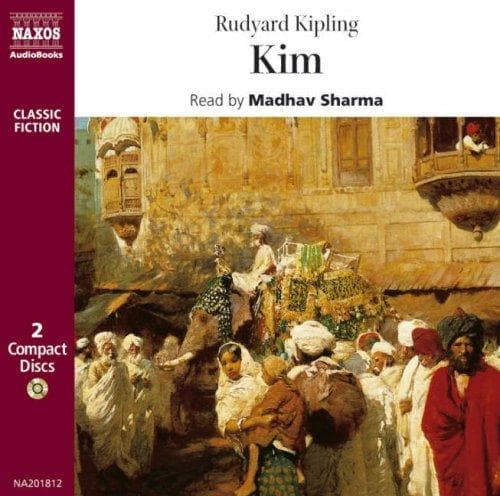
Adventure stories; Boys -- Fiction; India -- Fiction; Irish -- India -- Fiction; Lamas -- Fiction; Orphans -- Fiction; Spy stories
on the changing dresses, and changed speech and gesture therewith.
Carried away by enthusiasm, he volunteered to show Lurgan Sahib one
evening how the disciples of a certain caste of _faquir_, old Lahore
acquaintances, begged doles by the roadside; and what sort of language
he would use to an Englishman, to a Punjabi farmer going to a fair, and
to a woman without a veil. Lurgan Sahib laughed immensely, and begged
Kim to stay as he was, immobile for half an hour—cross-legged,
ash-smeared, and wild-eyed, in the back room. At the end of that time
entered a hulking, obese Babu whose stockinged legs shook with fat, and
Kim opened on him with a shower of wayside chaff. Lurgan Sahib—this
annoyed Kim—watched the Babu and not the play.
“I think,” said the Babu heavily, lighting a cigarette, “I am of
opeenion that it is most extraordinary and effeecient performance.
Except that you had told me I should have opined that—that—that you
were pulling my legs. How soon can he become approximately effeecient
chain-man? Because _then_ I shall indent for him.”
“That is what he must learn at Lucknow.”
“Then order him to be jolly-dam’-quick. Good-night, Lurgan.” The Babu
swung out with the gait of a bogged cow.
When they were telling over the day’s list of visitors, Lurgan Sahib
asked Kim who he thought the man might be.
“God knows!” said Kim cheerily. The tone might almost have deceived
Mahbub Ali, but it failed entirely with the healer of sick pearls.
“That is true. God, He knows; but I wish to know what you think.”
Kim glanced sideways at his companion, whose eye had a way of
compelling truth.
“I—I think he will want me when I come from the school,
but”—confidentially, as Lurgan Sahib nodded approval—“I do not
understand how _he_ can wear many dresses and talk many tongues.”
“Thou wilt understand many things later. He is a writer of tales for a
certain Colonel. His honour is great only in Simla, and it is
noticeable that he has no name, but only a number and a letter—that is
a custom among us.”
“And is there a price upon his head too—as upon Mah—all the others?”
“Not yet; but if a boy rose up who is now sitting here and went—look,
the door is open!—as far as a certain house with a red-painted veranda,
behind that which was the old theatre in the Lower Bazar, and whispered
through the shutters: ‘Hurree Chunder Mookerjee bore the bad news of
last month’, that boy might take away a belt full of rupees.”
“How many?” said Kim promptly.
“Five hundred—a thousand—as many as he might ask for.”
“Good. And for how long might such a boy live after the news was told?”
He smiled merrily at Lurgan’s Sahib’s very beard.
“Ah! That is to be well thought of. Perhaps if he were very clever, he
might live out the day—but not the night. By no means the night.”
“Then what is the Babu’s pay if so much is put upon his head?”
Public-domain text, read in full here on John Shaqi.
Reviews
Reviews
No reviews yet
Be the first to share your thoughts on this work.
Elsewhere in the archive
Join the Discussion
Join the discussion
Sign in to leave a comment or review.
Sign InorCreate an account