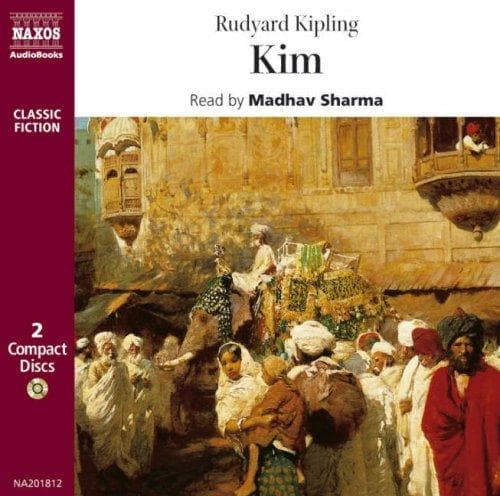
Adventure stories; Boys -- Fiction; India -- Fiction; Irish -- India -- Fiction; Lamas -- Fiction; Orphans -- Fiction; Spy stories
The hot and crowded bazars blazed with light as they made their way
through the press of all the races in Upper India, and the lama mooned
through it like a man in a dream. It was his first experience of a
large manufacturing city, and the crowded tram-car with its continually
squealing brakes frightened him. Half pushed, half towed, he arrived at
the high gate of the Kashmir Serai: that huge open square over against
the railway station, surrounded with arched cloisters, where the camel
and horse caravans put up on their return from Central Asia. Here were
all manner of Northern folk, tending tethered ponies and kneeling
camels; loading and unloading bales and bundles; drawing water for the
evening meal at the creaking well-windlasses; piling grass before the
shrieking, wild-eyed stallions; cuffing the surly caravan dogs; paying
off camel-drivers; taking on new grooms; swearing, shouting, arguing,
and chaffering in the packed square. The cloisters, reached by three or
four masonry steps, made a haven of refuge around this turbulent sea.
Most of them were rented to traders, as we rent the arches of a
viaduct; the space between pillar and pillar being bricked or boarded
off into rooms, which were guarded by heavy wooden doors and cumbrous
native padlocks. Locked doors showed that the owner was away, and a few
rude—sometimes very rude—chalk or paint scratches told where he had
gone. Thus: “Lutuf Ullah is gone to Kurdistan.” Below, in coarse verse:
“O Allah, who sufferest lice to live on the coat of a Kabuli, why hast
thou allowed this louse Lutuf to live so long?”
Kim, fending the lama between excited men and excited beasts, sidled
along the cloisters to the far end, nearest therailway station, where
Mahbub Ali, the horse-trader, lived when he came in from that
mysterious land beyond the Passes of the North.
Kim had had many dealings with Mahbub in his little life, especially
between his tenth and his thirteenth year—and the big burly Afghan, his
beard dyed scarlet with lime (for he was elderly and did not wish his
grey hairs to show), knew the boy’s value as a gossip. Sometimes he
would tell Kim to watch a man who had nothing whatever to do with
horses: to follow him for one whole day and report every soul with whom
he talked. Kim would deliver himself of his tale at evening, and Mahbub
would listen without a word or gesture. It was intrigue of some kind,
Kim knew; but its worth lay in saying nothing whatever to anyone except
Mahbub, who gave him beautiful meals all hot from the cookshop at the
head of the serai, and once as much as eight annas in money.
“He is here,” said Kim, hitting a bad-tempered camel on the nose. “Ohé,
Mahbub Ali!” He halted at a dark arch and slipped behind the bewildered
lama.
Public-domain text, read in full here on John Shaqi.
Reviews
Reviews
No reviews yet
Be the first to share your thoughts on this work.
Join the Discussion
Join the discussion
Sign in to leave a comment or review.
Sign InorCreate an account