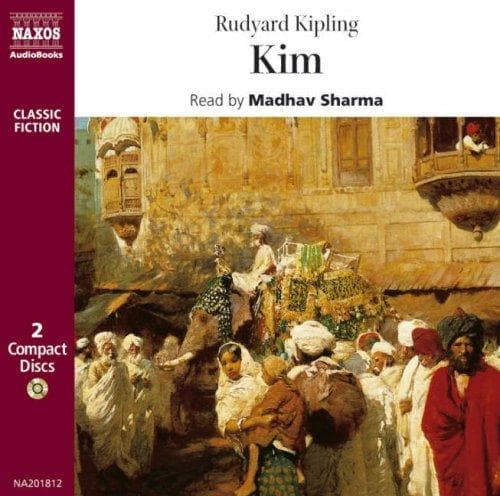
Adventure stories; Boys -- Fiction; India -- Fiction; Irish -- India -- Fiction; Lamas -- Fiction; Orphans -- Fiction; Spy stories
“Assuredly. Else why should we come? Enter, or we are left,” cried Kim.
“See!” shrilled the Amritzar girl. “He has never entered a train. Oh,
see!”
“Nay, help,” said the cultivator, putting out a large brown hand and
hauling him in. “Thus is it done, father.”
“But—but—I sit on the floor. It is against the Rule to sit on a bench,”
said the lama. “Moreover, it cramps me.”
“I say,” began the money-lender, pursing his lips, “that there is not
one rule of right living which these _te-rains_ do not cause us to
break. We sit, for example, side by side with all castes and peoples.”
“Yea, and with most outrageously shameless ones,” said the wife,
scowling at the Amritzar girl making eyes at the young sepoy.
“I said we might have gone by cart along the road,” said the husband,
“and thus have saved some money.”
“Yes—and spent twice over what we saved on food by the way. That was
talked out ten thousand times.”
“Ay, by ten thousand tongues,” grunted he.
“The Gods help us poor women if we may not speak. Oho! He is of that
sort which may not look at or reply to a woman.” For the lama,
constrained by his Rule, took not the faintest notice of her. “And his
disciple is like him?”
“Nay, mother,” said Kim most promptly. “Not when the woman is
well-looking and above all charitable to the hungry.”
“A beggar’s answer,” said the Sikh, laughing. “Thou hast brought it on
thyself, sister!” Kim’s hands were crooked in supplication.
“And whither goest thou?” said the woman, handing him the half of a
cake from a greasy package.
“Even to Benares.”
“Jugglers belike?” the young soldier suggested. “Have ye any tricks to
pass the time? Why does not that yellow man answer?”
“Because,” said Kim stoutly, “he is holy, and thinks upon matters
hidden from thee.”
“That may be well. We of the Ludhiana Sikhs”—he rolled it out
sonorously—“do not trouble our heads with doctrine. We fight.”
“My sister’s brother’s son is _naik_ (corporal) in that regiment,” said
the Sikh craftsman quietly. “There are also some Dogra companies
there.” The soldier glared, for a Dogra is of other caste than a Sikh,
and the banker tittered.
“They are all one to me,” said the Amritzar girl.
“That we believe,” snorted the cultivator’s wife malignantly.
“Nay, but all who serve the Sirkar with weapons in their hands are, as
it were, one brotherhood. There is one brotherhood of the caste, but
beyond that again”—she looked round timidly—“the bond of the
_Pulton_—the Regiment—eh?”
“My brother is in a Jat regiment,” said the cultivator. “Dogras be good
men.”
“Thy Sikhs at least were of that opinion,” said the soldier, with a
scowl at the placid old man in the corner. “_Thy_ Sikhs thought so when
our two companies came to help them at the Pirzai Kotal in the face of
eight Afridi standards on the ridge not three months gone.”
Public-domain text, read in full here on John Shaqi.
Reviews
Reviews
No reviews yet
Be the first to share your thoughts on this work.
Join the Discussion
Join the discussion
Sign in to leave a comment or review.
Sign InorCreate an account