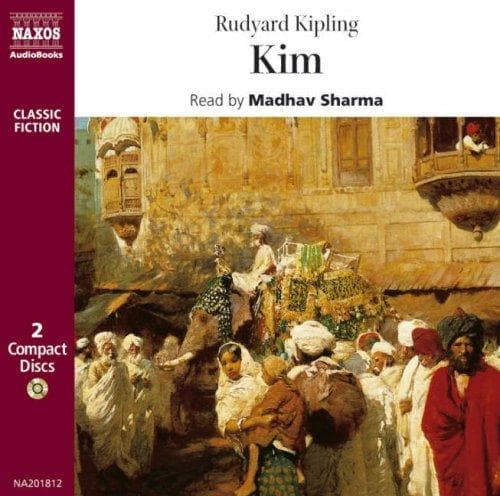
Adventure stories; Boys -- Fiction; India -- Fiction; Irish -- India -- Fiction; Lamas -- Fiction; Orphans -- Fiction; Spy stories
Nowadays, well-educated natives are of opinion that when their
womenfolk travel—and they visit a good deal—it is better to take them
quickly by rail in a properly screened compartment; and that custom is
spreading. But there are always those of the old rock who hold by the
use of their forefathers; and, above all, there are always the old
women—more conservative than the men—who toward the end of their days
go on a pilgrimage. They, being withered and undesirable, do not, under
certain circumstances, object to unveiling. After their long seclusion,
during which they have always been in business touch with a thousand
outside interests, they love the bustle and stir of the open road, the
gatherings at the shrines, and the infinite possibilities of gossip
with like-minded dowagers. Very often it suits a longsuffering family
that a strong-tongued, iron-willed old lady should disport herself
about India in this fashion; for certainly pilgrimage is grateful to
the Gods. So all about India, in the most remote places, as in the most
public, you find some knot of grizzled servitors in nominal charge of
an old lady who is more or less curtained and hid away in a
bullock-cart. Such men are staid and discreet, and when a European or a
high-caste native is near will net their charge with most elaborate
precautions; but in the ordinary haphazard chances of pilgrimage the
precautions are not taken. The old lady is, after all, intensely human,
and lives to look upon life.
Kim marked down a gaily ornamented _ruth_ or family bullock-cart, with
a broidered canopy of two domes, like a double-humped camel, which had
just been drawn into the _parao_. Eight men made its retinue, and two
of the eight were armed with rusty sabres—sure signs that they followed
a person of distinction, for the common folk do not bear arms. An
increasing cackle of complaints, orders, and jests, and what to a
European would have been bad language, came from behind the curtains.
Here was evidently a woman used to command.
Kim looked over the retinue critically. Half of them were thin-legged,
grey-bearded Ooryas from down country. The other half were duffle-clad,
felt-hatted hillmen of the North; and that mixture told its own tale,
even if he had not overheard the incessant sparring between the two
divisions. The old lady was going south on a visit—probably to a rich
relative, most probably to a son-in-law, who had sent up an escort as a
mark of respect. The hillmen would be of her own people—Kulu or Kangra
folk. It was quite clear that she was not taking her daughter down to
be wedded, or the curtains would have been laced home and the guard
would have allowed no one near the car. A merry and a high-spirited
dame, thought Kim, balancing the dung-cake in one hand, the cooked food
in the other, and piloting the lama with a nudging shoulder. Something
might be made out of the meeting. The lama would give him no help, but,
as a conscientious _chela_, Kim was delighted to beg for two.
Public-domain text, read in full here on John Shaqi.
Reviews
Reviews
No reviews yet
Be the first to share your thoughts on this work.
Join the Discussion
Join the discussion
Sign in to leave a comment or review.
Sign InorCreate an account