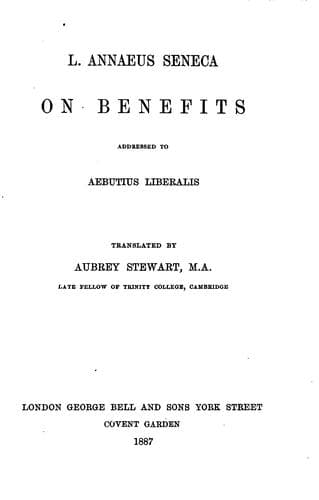
L. Annaeus Seneca on BenefitsSeneca, Lucius Annaeus
Philosophy
L. Annaeus Seneca on Benefits
Seneca, Lucius Annaeus
Benevolence; Classical literature; Conduct of life; Essays
In the preceding books I seem to have accomplished the object which I
proposed to myself, since in them I have discussed how a benefit ought
to be bestowed, and how it ought to be received. These are the limits of
this action; when I dwell upon it further I am not obeying the orders,
but the caprices of my subject which ought to be followed whither it
leads, not whither it allures us to wander; for now and then something
will arise, which, although it is all but unconnected with the subject,
instead of being a necessary part of it, still thrills the mind with a
certain charm. However, since you wish it to be so, let us go on, after
having completed our discussion of the heads of the subject itself,
to investigate those matters which, if you wish for truth, I must
call adjacent to it, not actually connected with it; to examine which
carefully is not one worth one's while, and yet is not labour in vain.
No praise, however, which I can give to benefits does justice to
you, Aebutius Liberalis, a man of excellent disposition and naturally
inclined to bestow them. Never have I seen any one esteem even the most
trifling services more kindly; indeed, your good-nature goes so far
as to regard whatever benefit is bestowed upon anyone as bestowed upon
yourself; you are prepared to pay even what is owed by the ungrateful,
that no one may regret having bestowed benefits. You yourself are so far
from any boastfulness, you are so eager at once to free those whom you
serve from any feeling of obligation to you, that you like, when giving
anything to any one, to seem not so much to be giving a present as
returning one; and therefore what you give in this manner will all the
more fully he repaid to you: for, as a rule, benefits come to one who
does not demand repayment of them; and just as glory follows those who
avoid it, so men receive a more plentiful harvest in return for benefits
bestowed upon those who had it in their power to be ungrateful. With you
there is no reason why those who have received benefits from you should
not ask for fresh ones; nor would you refuse to bestow others, to
overlook and conceal what you have given, and to add to it more and
greater gifts, since it is the aim of all the best men and the noblest
dispositions to bear with an ungrateful man until you make him grateful.
Be not deceived in pursuing this plan; vice, if you do not too soon
begin to hate it, will yield to virtue.
Public-domain text, read in full here on John Shaqi.
Reviews
Reviews
No reviews yet
Be the first to share your thoughts on this work.
Elsewhere in the archive
Join the Discussion
Join the discussion
Sign in to leave a comment or review.
Sign InorCreate an account