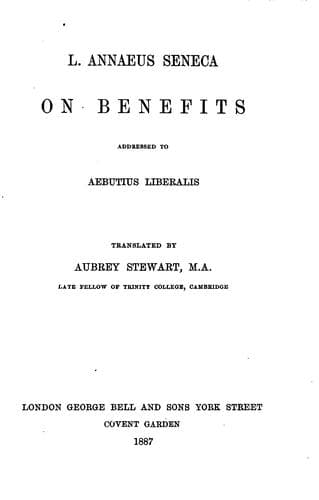
L. Annaeus Seneca on BenefitsSeneca, Lucius Annaeus
Philosophy
L. Annaeus Seneca on Benefits
Seneca, Lucius Annaeus
Benevolence; Classical literature; Conduct of life; Essays
Of all the matters which we have discussed, Aebutius Liberalis, there is
none more essential, or which, as Sallust says, ought to be stated with
more care than that which is now before us: whether the bestowal of
benefits and the return of gratitude for them are desirable objects
in themselves. Some men are found who act honourably from commercial
motives, and who do not care for unrewarded virtue, though it can confer
no glory if it brings any profit. What can be more base than for a man
to consider what it costs him to be a good man, when virtue neither
allures by gain nor deters by loss, and is so far from bribing any one
with hopes and promises, that on the other hand she bids them spend
money upon herself, and often consists in voluntary gifts? We must go to
her, trampling what is merely useful under our feet: whithersoever she
may call us or send us we must go, without any regard for our private
fortunes, sometimes without sparing even our own blood, nor must we
ever refuse to obey any of her commands. "What shall I gain," says my
opponent, "if I do this bravely and gratefully?" You will gain the doing
of it--the deed itself is your gain. Nothing beyond this is promised. If
any advantage chances to accrue to you, count it as something extra.
The reward of honourable dealings lies in themselves. If honour is to be
sought after for itself, since a benefit is honourable, it follows that
because both of these are of the same nature, their conditions must also
be the same. Now it has frequently and satisfactorily been proved, that
honour ought to be sought after for itself alone.
Public-domain text, read in full here on John Shaqi.
Reviews
Reviews
No reviews yet
Be the first to share your thoughts on this work.
Elsewhere in the archive
Join the Discussion
Join the discussion
Sign in to leave a comment or review.
Sign InorCreate an account