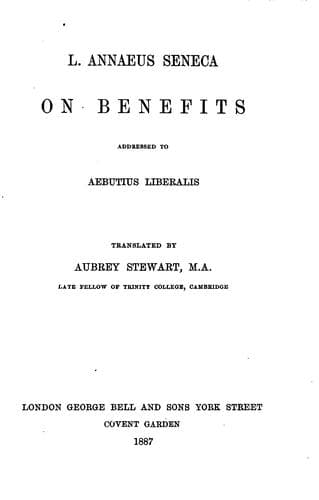
L. Annaeus Seneca on BenefitsSeneca, Lucius Annaeus
Philosophy
L. Annaeus Seneca on Benefits
Seneca, Lucius Annaeus
Benevolence; Classical literature; Conduct of life; Essays
XIII. You Epicureans take pleasure in making a study of dull torpidity,
in seeking for a repose which differs little from sound sleep, in
lurking beneath the thickest shade, in amusing with the feeblest
possible trains of thought that sluggish condition of your languid minds
which you term tranquil contemplation, and in stuffing with food and
drink, in the recesses of your gardens, your bodies which are pallid
with want of exercise; we Stoics, on the other hand, take pleasure in
bestowing benefits, even though they cost us labour, provided that they
lighten the labours of others; though they lead us into danger, provided
that they save others, though they straiten our means, if they alleviate
the poverty and distresses of others. What difference does it make to me
whether I receive benefits or not? even if I receive them, it is still
my duty to bestow them. A benefit has in view the advantage of him
upon whom we bestow it, not our own; otherwise we merely bestow it upon
ourselves. Many things, therefore, which are of the greatest possible
use to others lose all claim to gratitude by being paid for. Merchants
are of use to cities, physicians to invalids, dealers to slaves; yet all
these have no claim to the gratitude of those whom they benefit, because
they seek their own advantage through that of others. That which is
bestowed with a view to profit is not a benefit. "I will give this in
order that I may get a return for it" is the language of a broker.
XIV. I should not call a woman modest, if she rebuffed her lover in
order to increase his passion, or because she feared the law or her
husband; as Ovid says:
"She that denies, because she does not dare
To yield, in spirit grants her lover's prayer."
Indeed, the woman who owes her chastity, not to her own virtue, but to
fear, may rightly be classed as a sinner. In the same manner, he who
merely gave in order that he might receive, cannot be said to have
given. Pray, do we bestow benefits upon animals when we feed them for
our use or for our table? do we bestow benefits upon trees when we tend
them that they may not suffer from drought or from hardness of ground?
No one is moved by righteousness and goodness of heart to cultivate an
estate, or to do any act in which the reward is something apart from the
act itself; but he is moved to bestow benefits, not by low and grasping
motives, but by a kind and generous mind, which even after it has given
is willing to give again, to renew its former bounties by fresh ones,
which thinks only of how much good it can do the man to whom it gives;
whereas to do any one a service because it is our interest to do so is a
mean action, which deserves no praise, no credit. What grandeur is there
in loving oneself, sparing oneself, gaining profit for oneself? The true
love of giving calls us away from all this, forcibly leads us to put up
with loss, and foregoes its own interest, deriving its greatest pleasure
from the mere act of doing good.
Public-domain text, read in full here on John Shaqi.
Reviews
Reviews
No reviews yet
Be the first to share your thoughts on this work.
Elsewhere in the archive
Join the Discussion
Join the discussion
Sign in to leave a comment or review.
Sign InorCreate an account