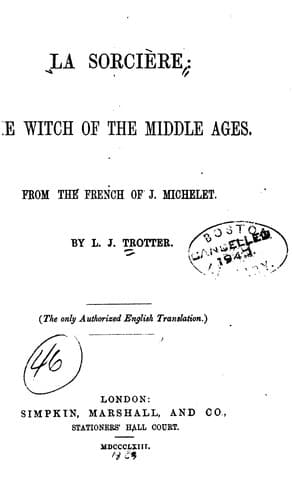
La Sorcière: The Witch of the Middle AgesMichelet, Jules
History
La Sorcière: The Witch of the Middle Ages
Michelet, Jules
Demonomania -- History -- To 1500; Satanism -- History -- To 1500; Superstition -- History -- To 1500; Witchcraft -- History -- To 1500
M. d’Espagnet could give but a few moments to this matter, having
speedily to show himself in the Estates of Béarn. Lancre being pushed
unwittingly forward by the violence of the younger informers, who
would have fallen into great danger, if they had failed to get the old
ones burnt, threw the reins on the neck of the business, and hurried
it on at full gallop. A due amount of witches were condemned to the
stake. These, too, on finding themselves lost, ended by impeaching
others. When the first batch were brought to the stake, a frightful
scene took place. Executioner, constables, and sergeants, all thought
their last hour was come. The crowd fell savagely upon the carts,
seeking to force the wretches to withdraw their accusations. The men
put daggers to their throats: their furious companions were like to
finish them with their nails.
Justice, however, got out of the scrape with some credit; and then the
commissioners went on to the harder work of sentencing eight priests
whom they had taken up. The girls’ confessions had brought these men
to light. Lancre speaks of their morals like one who knew all about
them of himself. He rebukes them, not only for their gay proceedings
on Sabbath nights, but, most of all, for their sextonesses and female
churchwardens. He even repeats certain tales about the priests having
sent off the husbands to Newfoundland, and brought back Devils from
Japan who gave up the wives into their hands.
The clergy were deeply stirred: the Bishop of Bayonne would have made
resistance. His courage failing him, he appointed his vicar-general to
act as judge-assistant in his own absence. Luckily the Devil gave the
accused more help than their Bishop. He opened all the doors, so that
one morning five of the eight were found missing. The commissioners
lost no time in burning the three still left to them.
* * * * *
This happened about August, 1609. The Spanish inquisitors at Logroño
did not crown their proceedings with an _auto-da-fé_ before the 8th
November, 1610. They had met with far more trouble than our own
countrymen, owing to the frightful number of persons accused. How burn
a whole people? They sought advice of the Pope, of the greatest
doctors in Spain. The word was given to draw back. Only the wilful who
persisted in denying their guilt, were to be burnt; while they who
pleaded guilty should be let go. The same method had already been used
to rescue priests in trials for loose living. According to Llorente,
it was deemed sufficient, if they owned their crime, and went through
a slight penance.
The Inquisition, so deadly to heretics, so cruel to Moors and Jews,
was much less so to wizards. These, being mostly shepherds, had no
quarrel with the Church. The rejoicings of goatherds were too low, if
not too brutish, to disturb the enemies of free thought.
* * * * *
Public-domain text, read in full here on John Shaqi.
Reviews
Reviews
No reviews yet
Be the first to share your thoughts on this work.
Elsewhere in the archive
Join the Discussion
Join the discussion
Sign in to leave a comment or review.
Sign InorCreate an account