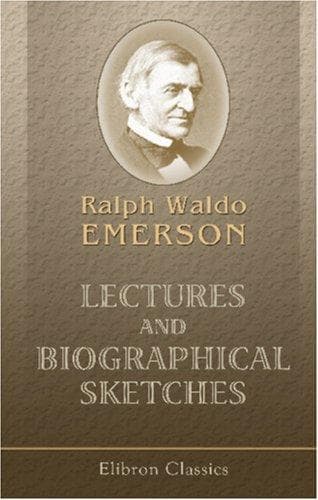
Lectures and biographical sketchesEmerson, Ralph Waldo
Philosophy
Lectures and biographical sketches
Emerson, Ralph Waldo
American essays -- 19th century; Speeches, addresses, etc., American -- 19th century
Of course every visitor found that there was a comic side to this
Paradise of shepherds and shepherdesses. There was a stove in every
chamber, and every one might burn as much wood as he or she would
saw. The ladies took cold on washing-day; so it was ordained that the
gentlemen-shepherds should wring and hang out clothes; which they
punctually did. And it would sometimes occur that when they danced
in the evening, clothes-pins dropped plentifully from their pockets.
The country members naturally were surprised to observe that one man
ploughed all day and one looked out of the window all day, and perhaps
drew his picture, and both received at night the same wages. One would
meet also some modest pride in their advanced condition, signified by a
frequent phrase, “Before we came out of civilization.”
The question which occurs to you had occurred much earlier to Fourier:
“How in this charming Elysium is the dirty work to be done?” And long
ago Fourier had exclaimed, “Ah! I have it,” and jumped with joy. “Don’t
you see,” he cried, “that nothing so delights the young Caucasian child
as dirt? See the mud-pies that all children will make if you will let
them. See how much more joy they find in pouring their pudding on the
table-cloth than into their beautiful mouths. The children from six to
eight, organized into companies with flags and uniforms, shall do this
last function of civilization.”
In Brook Farm was this peculiarity, that there was no head. In every
family is the father; in every factory, a foreman; in a shop, a master;
in a boat, the skipper; but in this Farm, no authority; each was
master or mistress of his or her actions; happy, hapless anarchists.
They expressed, after much perilous experience, the conviction that
plain dealing was the best defence of manners and moral between the
sexes. People cannot live together in any but necessary ways. The only
candidates who will present themselves will be those who have tried
the experiment of independence and ambition, and have failed; and none
others will barter for the most comfortable equality the chance of
superiority. Then all communities have quarrelled. Few people can live
together on their merits. There must be kindred, or mutual economy, or
a common interest in their business, or other external tie.
Public-domain text, read in full here on John Shaqi.
Reviews
Reviews
No reviews yet
Be the first to share your thoughts on this work.
Elsewhere in the archive
Join the Discussion
Join the discussion
Sign in to leave a comment or review.
Sign InorCreate an account