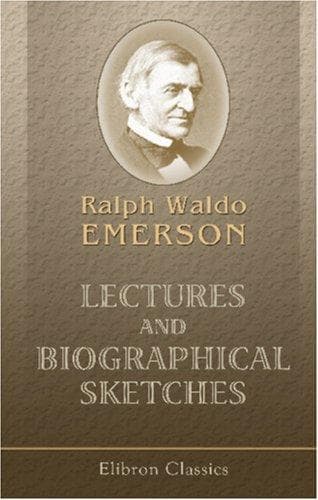
Lectures and biographical sketchesEmerson, Ralph Waldo
Philosophy
Lectures and biographical sketches
Emerson, Ralph Waldo
American essays -- 19th century; Speeches, addresses, etc., American -- 19th century
“Malden, November 15th, 1805.--What a rich day, so fully occupied in
pursuing truth that I scorned to touch a novel which for so many years
I have wanted. How insipid is fiction to a mind touched with immortal
views! November 16th.--I am so small in my expectations, that a week
of industry delights. Rose before light every morn; visited from
necessity once, and again for books; read Butler’s Analogy; commented
on the Scriptures; read in a little book,--Cicero’s Letters,--a few:
touched Shakspeare,--washed, carded, cleaned house, and baked. To-day
cannot recall an error, nor scarcely a sacrifice, but more fulness
of content in the labors of a day never was felt. There is a sweet
pleasure in bending to circumstances while superior to them.
“Malden, September, 1807.--The rapture of feeling I would part from,
for days more devoted to higher discipline. But when Nature beams
with such excess of beauty, when the heart thrills with hope in its
Author,--feels that it is related to him more than by any ties of
Creation,--it exults, too fondly perhaps for a state of trial. But in
dead of night, nearer morning, when the eastern stars glow or appear
to glow with more indescribable lustre, a lustre which penetrates the
spirit with wonder and curiosity,--then, however awed, who can fear?
Since Sabbath, Aunt B---- [the insane aunt] was brought here. Ah!
mortifying sight! instinct perhaps triumphs over reason, and every
dignified respect to herself, in her anxiety about recovery, and the
smallest means connected. Not one wish of others detains her, not one
care. But it alarms me not, I shall delight to return to God. His name
my fullest confidence. His sole presence ineffable pleasure.
“I walked yesterday five or more miles, lost to mental or heart
existence, through fatigue,--just fit for the society I went into,
all mildness and the most commonplace virtue. The lady is celebrated
for her cleverness, and she was never so good to me. Met a lady in
the morning walk, a foreigner,--conversed on the accomplishments of
Miss T. My mind expanded with novel and innocent pleasure. Ah! were
virtue, and that of dear heavenly meekness attached by any necessity to
a lower rank of genteel people, who would sympathize with the exalted
with satisfaction? But that is not the case, I believe. A mediocrity
does seem to me more distant from eminent virtue than the extremes of
station; though after all it must depend on the nature of the heart. A
mediocre mind will be deranged in either extreme of wealth or poverty,
praise or censure, society or solitude. The feverish lust of notice
perhaps in all these cases would injure the heart of common refinement
and virtue.”
Public-domain text, read in full here on John Shaqi.
Reviews
Reviews
No reviews yet
Be the first to share your thoughts on this work.
Elsewhere in the archive
Join the Discussion
Join the discussion
Sign in to leave a comment or review.
Sign InorCreate an account