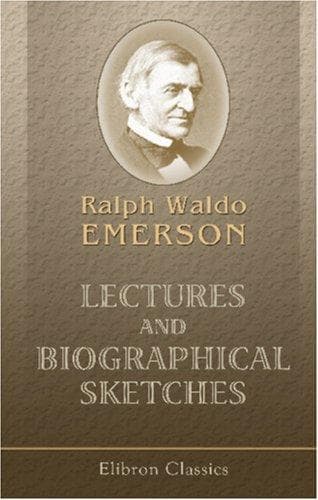
Lectures and biographical sketchesEmerson, Ralph Waldo
Philosophy
Lectures and biographical sketches
Emerson, Ralph Waldo
American essays -- 19th century; Speeches, addresses, etc., American -- 19th century
There was somewhat military in his nature, not to be subdued, always
manly and able, but rarely tender, as if he did not feel himself except
in opposition. He wanted a fallacy to expose, a blunder to pillory, I
may say required a little sense of victory, a roll of the drum, to call
his powers into full exercise. It cost him nothing to say No; indeed
he found it much easier than to say Yes. It seemed as if his first
instinct on hearing a proposition was to controvert it, so impatient
was he of the limitations of our daily thought. This habit, of course,
is a little chilling to the social affections; and though the companion
would in the end acquit him of any malice or untruth, yet it mars
conversation. Hence, no equal companion stood in affectionate relations
with one so pure and guileless. “I love Henry,” said one of his
friends, “but I cannot like him; and as for taking his arm, I should as
soon think of taking the arm of an elm-tree.”
Yet, hermit and stoic as he was, he was really fond of sympathy, and
threw himself heartily and childlike into the company of young people
whom he loved, and whom he delighted to entertain, as he only could,
with the varied and endless anecdotes of his experiences by field and
river: and he was always ready to lead a huckleberry-party or a search
for chestnuts or grapes. Talking, one day, of a public discourse,
Henry remarked, that whatever succeeded with the audience was bad. I
said, “Who would not like to write something which all can read, like
Robinson Crusoe? and who does not see with regret that his page is not
solid with a right materialistic treatment, which delights everybody?”
Henry objected, of course, and vaunted the better lectures which
reached only a few persons. But, at supper, a young girl, understanding
that he was to lecture at the Lyceum, sharply asked him, “Whether his
lecture would be a nice, interesting story, such as she wished to hear,
or whether it was one of those old philosophical things that she did
not care about.” Henry turned to her, and bethought himself, and, I
saw, was trying to believe that he had matter that might fit her and
her brother, who were to sit up and go to the lecture, if it was a good
one for them.
Public-domain text, read in full here on John Shaqi.
Reviews
Reviews
No reviews yet
Be the first to share your thoughts on this work.
Elsewhere in the archive
Join the Discussion
Join the discussion
Sign in to leave a comment or review.
Sign InorCreate an account