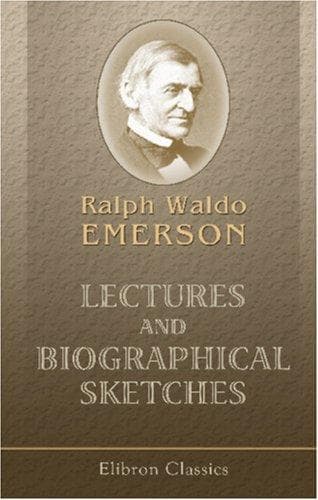
Lectures and biographical sketchesEmerson, Ralph Waldo
Philosophy
Lectures and biographical sketches
Emerson, Ralph Waldo
American essays -- 19th century; Speeches, addresses, etc., American -- 19th century
No truer American existed than Thoreau. His preference of his country
and condition was genuine, and his aversation from English and European
manners and tastes almost reached contempt. He listened impatiently
to news or bonmots gleaned from London circles; and though he tried
to be civil, these anecdotes fatigued him. The men were all imitating
each other, and on a small mould. Why can they not live as far apart
as possible, and each be a man by himself? What he sought was the most
energetic nature; and he wished to go to Oregon, not to London. “In
every part of Great Britain,” he wrote in his diary, “are discovered
traces of the Romans, their funereal urns, their camps, their roads,
their dwellings. But New England, at least, is not based on any Roman
ruins. We have not to lay the foundations of our houses on the ashes of
a former civilization.”
But, idealist as he was, standing for abolition of slavery, abolition
of tariffs, almost for abolition of government, it is needless to say
he found himself not only unrepresented in actual politics, but almost
equally opposed to every class of reformers. Yet he paid the tribute of
his uniform respect to the Anti-Slavery party. One man, whose personal
acquaintance he had formed, he honored with exceptional regard. Before
the first friendly word had been spoken for Captain John Brown, he
sent notices to most houses in Concord that he would speak in a
public hall on the condition and character of John Brown, on Sunday
evening, and invited all people to come. The Republican Committee,
the Abolitionist Committee, sent him word that it was premature and
not advisable. He replied,--“I did not send to you for advice, but to
announce that I am to speak.” The hall was filled at an early hour by
people of all parties, and his earnest eulogy of the hero was heard by
all respectfully, by many with a sympathy that surprised themselves.
Public-domain text, read in full here on John Shaqi.
Reviews
Reviews
No reviews yet
Be the first to share your thoughts on this work.
Elsewhere in the archive
Join the Discussion
Join the discussion
Sign in to leave a comment or review.
Sign InorCreate an account