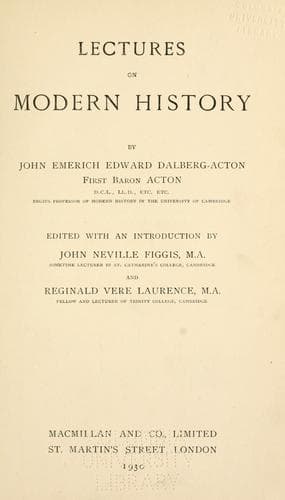
Lectures on Modern historyActon, John Emerich Edward Dalberg Acton, Baron
History
Lectures on Modern history
Acton, John Emerich Edward Dalberg Acton, Baron
History, Modern
It is the supreme achievement of Englishmen, and their bequest to the
nations; but the patriarchs of the doctrine were the most infamous of
men. They set up the monument to perpetuate the belief that the
Catholics set fire to London. They invented the Black Box and the
marriage of Lucy Waters. They prompted, encouraged, and rewarded the
murderer Oates. They proclaimed that the Prince of Wales came in the
warming pan. They were associated with the Rye House assassins; that
conspiracy was their ruin. Charles triumphed, and did not spare his
enemies. When he died, in spite of the Dover Treaty, of his paid
subserviency to France, of the deliberate scheme to subvert the
liberties of England, James, the chief culprit, succeeded, with
undiminished power. The prostrate Whigs were at the mercy of
Jeffreys.
But forty years of agitation had produced the leaven that has leavened
the world. The revolutionary system was saved, because the king threw
away his advantage. The Whig party became supreme in the State by a
series of events which are the most significant in English History.
XIII
THE ENGLISH REVOLUTION
THREE-QUARTERS of a century of struggling and experiment, from the
fall of Bacon to the death of Charles II, had ended in failure, and
the government of England had been brought into line with continental
monarchy when James ascended the throne.
The House of Commons refused to listen to Seymour s warning speech,
and voted, nemine discrepante, a revenue which, by the growth of
trade, soon rose to near two millions. It was in the king's power to
retain that loyal and submissive parliament as long as he chose, and
he was not obliged to meet it annually. He had the control of the
constituencies. The press was not free, and the proceedings of the
legislature were withdrawn from public knowledge. Judges could be
dismissed at will, until the bench was filled with prerogative
lawyers. There was an army kept in foreign pay that could be recalled
when it was wanted. Passive obedience was taught as a precept by the
universities, and as a religious dogma by the Church.
Public-domain text, read in full here on John Shaqi.
Reviews
Reviews
No reviews yet
Be the first to share your thoughts on this work.
Elsewhere in the archive
Join the Discussion
Join the discussion
Sign in to leave a comment or review.
Sign InorCreate an account