There, under the new conditions of tenure, the farmer begins to invest
freely, his money and his labour, upon soil that can repay exertion,
and under a climate that has none of Ulster's harshness. In Wexford,
where most of the Irish tobacco was grown till the growing of it was
prohibited by an amazing Act of Parliament some seventy years ago, the
plant took so kindly to the soil that it perpetuated itself without
cultivation: and when (after infinite solicitation and manoeuvring)
leave was given us to revive this industry, the distinctive variety was
recovered from these casual plants, and has been cultivated among other
species in Colonel Edwards's farm at Navan. Now a soil and a climate
in which tobacco will reproduce itself in the wild state is a rare
combination so far north, and Wexford men are trying to utilize its
advantages.
In Carlow and Kilkenny one sees prosperity too on every side, while
Louth disputes the palm with Wexford. Only on the richest land of
all, through Meath into Kildare, is there the lamentable spectacle of
depopulation--a rich wilderness. Yet even there it is to be hoped that
the spread of co-operation and the gradual work of land settlement may
undo some of the mischief wrought by reckless clearances.
Those who in visiting Ireland have too often found images and memories
of beauty marred by the association of ragged poverty, overshadowed by
a very cloud of despair, may find in Leinster at least a beauty where
all the omens are hopeful and where, even beside the ruins only too
evident, a strong new fabric of industry is being built up.
PRINTED IN GREAT BRITAIN
_At the Villapress, Glasgow, Scotland_
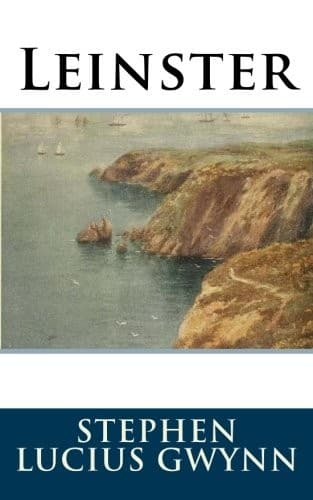
End of the Project Gutenberg EBook of Leinster, by Stephen Lucius Gwynn
Public-domain text, read in full here on John Shaqi.
Reviews
Reviews
No reviews yet
Be the first to share your thoughts on this work.
Join the Discussion
Join the discussion
Sign in to leave a comment or review.
Sign InorCreate an account