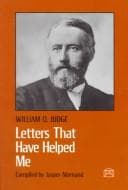
Judge, William Quan, 1851-1896; Theosophists -- United States -- Correspondence; Theosophy
Then, too, remember that the influences of this present age are
powerful for producing these feelings. What despair and agony of doubt
exist to-day in all places. In this time of upturning, the wise man
_waits_. He bends himself, like the reed, to the blast, so that it
may blow over his head. Rising, as you do, into the plane where these
currents are rushing while you try to travel higher still, you feel
these inimical influences, although unknown to you. It is an age of
iron. A forest of iron trees, black and forbidding, with branches of
iron and brilliant leaves of steel. The winds blow through its arches
and we hear a dreadful grinding and crashing sound that silences the
still small voice of Love. And its inhabitants mistake this for the
voice of God; they imitate it and add to its terrors. Faint not, be not
self-condemned. We both are that soundless OM; we rest together upon
the bosom of Master. You are not tired; it is that body, now weak, and
not only weak but shaken by the force of your own powers, physical and
psychical. But the wise man learns to assume in the body an attitude of
carelessness that is more careful really than any other. Let that be
yours. You are judge. Who accepts you, who dares judge but yourself?
Let us wait, then, for natural changes, knowing that if the eye is
fixed where the light shines, we shall presently know what to do. This
hour is not ripe. But unripe fruit gets ripe, and falls or is plucked.
The day must surely strike when you will pluck it down. You are no
longer troubled by vain fears or compromises. When the great thought
comes near enough, you will go. We must all be servants before we can
hope to be masters in the least.
I have been re-reading the life of Buddha, and it fills me with
a longing desire to give myself for humanity, to devote myself to
a fierce, determined effort to plant myself nearer the altar of
sacrifice. As I do not always know just what ought to be done, I must
stand on what Master says: "Do what you _can_, if you ever expect to
see Them." This being true, and another Adept saying, "Follow the Path
They and I show, but do not follow _my_ path," why then, all we can do,
whether great or small, is to do just what we can, each in his proper
place. It is sure that if we have an immense devotion and do our best,
the result will be right for Them and us, even though we would have
done otherwise had we known more when we were standing on a course of
action. A devoted Chela once said: "I do not mind all these efforts at
explanation and all this trouble, for I always have found that that
which was done in Master's name was right and came out right." What is
done in those names is done without thought of self, and motive is the
essential test.
Public-domain text, read in full here on John Shaqi.
Reviews
Reviews
No reviews yet
Be the first to share your thoughts on this work.
Join the Discussion
Join the discussion
Sign in to leave a comment or review.
Sign InorCreate an account