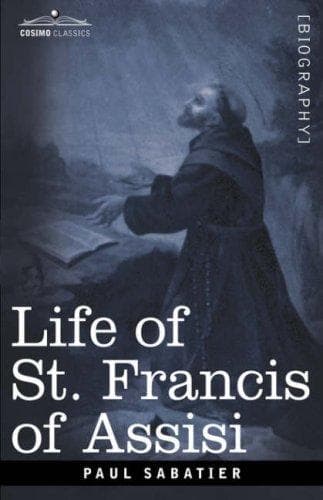
Christian saints -- Biography; Francis, of Assisi, Saint, 1182-1226
Still it is easy to see that Franciscan poverty is neither to be
confounded with the unfeeling pride of the stoic, nor with the stupid
horror of all joy felt by certain devotees; St. Francis renounced
everything only that he might the better possess everything. The lives
of the immense majority of our contemporaries are ruled by the fatal
error that the more one possesses the more one enjoys. Our exterior,
civil liberties continually increase, but at the same time our inward
freedom is taking flight; how many are there among us who are literally
possessed by what they possess?[9]
Poverty not only permitted the Brothers to mingle with the poor and
speak to them with authority, but, removing from them all material
anxiety, it left them free to enjoy without hindrance those hidden
treasures which nature reserves for pure idealists.
The ever-thickening barriers which modern life, with its sickly search
for useless comfort, has set up between us and nature did not exist for
these men, so full of youth and life, eager for wide spaces and the
outer air. This is what gave St. Francis and his companions that quick
susceptibility to Nature which made them thrill in mysterious harmony
with her. Their communion with Nature was so intimate, so ardent, that
Umbria, with the harmonious poetry of its skies, the joyful outburst of
its spring-time, is still the best document from which to study them.
The tie between the two is so indissoluble, that after having lived a
certain time in company with St. Francis, one can hardly, on reading
certain passages of his biographers, help _seeing_ the spot where the
incident took place, hearing the vague sounds of creatures and things,
precisely as, when reading certain pages of a beloved author, one hears
the sound of his voice.
The worship of Poverty of the early Franciscans had in it, then, nothing
ascetic or barbarous, nothing which recalls the Stylites or the Nazirs.
She was their bride, and like true lovers they felt no fatigues which
they might endure to find and remain near her.
La lor concordia e lor lieti sembianti,
Amor e maraviglia e dolce sguardo
Facean esser cagion de' pensier santi.[10]
To draw the portrait of an ideal knight at the beginning of the
thirteenth century is to draw Francis's very portrait, with this
difference, that what the knight did for his lady, he did for Poverty.
This comparison is not a mere caprice; he himself profoundly felt it and
expressed it with perfect clearness, and it is only by keeping it
clearly present in the mind that we can see into the very depth of his
heart.[11]
Public-domain text, read in full here on John Shaqi.
Reviews
Reviews
No reviews yet
Be the first to share your thoughts on this work.
Elsewhere in the archive
Join the Discussion
Join the discussion
Sign in to leave a comment or review.
Sign InorCreate an account