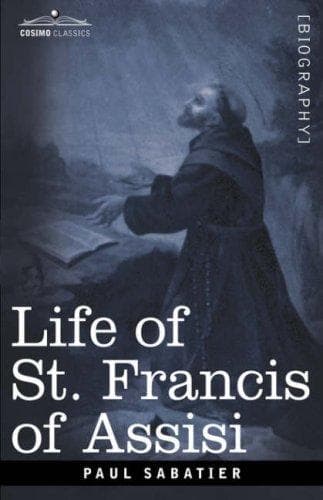
Christian saints -- Biography; Francis, of Assisi, Saint, 1182-1226
Nevertheless a great change had taken place in him. Neither pleasures
nor work could long hold him; he spent a portion of his days in long
country rambles, often accompanied by a friend most different from those
whom until now we have seen about him. The name of this friend is not
known, but from certain indications one is inclined to believe that he
was Bombarone da Beviglia, the future Brother Elias.[10]
Francis now went back to his reflections at the time of his recovery,
but with less of bitterness. His own heart and his friend agreed in
saying to him that it is possible no longer to trust either in pleasure
or in glory and yet to find worthy causes to which to consecrate one's
life. It is at this moment that religious thought seems to have awaked
in him. From the moment that he saw this new way of life his desire to
run in it had all the fiery impetuosity which he put into all his
actions. He was continually calling upon his friend and leading him
apart into the most sequestered paths.
But intense conflicts are indescribable. We struggle, we suffer alone.
It is the nocturnal wrestling of Bethel, mysterious and solitary. The
soul of Francis was great enough to endure this tragic duel. His friend
had marvellously understood his part in this contest. He gave a few rare
counsels, but much of the time he contented himself with manifesting his
solicitude by following Francis everywhere and never asking to know more
than he could tell him.
Often Francis directed his steps to a grotto in the country near Assisi,
which he entered alone. This rocky cave concealed in the midst of the
olive trees became for faithful Franciscans that which Gethsemane is for
Christians. Here Francis relieved his overcharged heart by heavy groans.
Sometimes, seized with a real horror for the disorders of his youth, he
would implore mercy, but the greater part of the time his face was
turned toward the future; feverishly he sought for that higher truth to
which he longed to dedicate himself, that pearl of great price of which
the gospel speaks: "Whosoever seeks, finds; he who asks, receives; and
to him who knocks, it shall be opened."
When he came out after long hours of seclusion the pallor of his
countenance, the painful tension of his features told plainly enough of
the intensity of his asking and the violence of his knocks.[11]
The inward man, to borrow the language of the mystics, was not yet
formed in him, but it needed only the occasion to bring about the final
break with the past. The occasion soon presented itself.
Public-domain text, read in full here on John Shaqi.
Reviews
Reviews
No reviews yet
Be the first to share your thoughts on this work.
Join the Discussion
Join the discussion
Sign in to leave a comment or review.
Sign InorCreate an account