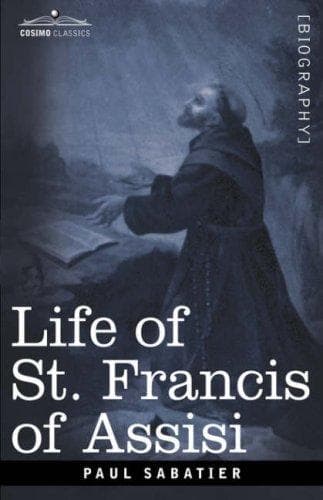
Christian saints -- Biography; Francis, of Assisi, Saint, 1182-1226
Full of these thoughts they had set out, without provisions, to cross
the Campagna of Rome, whose few inhabitants never venture out in the
heat of the day. The road stretches away northward, keeping at some
distance from the Tiber; on the left the jagged crest of Soracte, bathed
in mists formed by the exhalations of the earth, looms up
disproportionately as it fades in the distance; on the right, the
everlasting undulations of the hillocks with their wide pastures
separated by thickets so parched and ragged that they seemed to cry for
mercy and pardon. Between them the dusty road which goes straight
forward, implacable, showing, as far as the eye can reach, nothing but
the quivering of the fiery air. Not a house, not a tree, not a passing
breeze, nothing to sustain the traveller under the disquietude which
creeps over him. Here and there are a few abandoned huts, their ruins
looking like the corpses of departed civilizations, and on the edge of
the horizon the hills rising up like gigantic and unsurmountable walls.
There are no words to describe the physical and moral sufferings to
which he is exposed who undertakes without proper preparation to cross
this inhospitable district. To the weakness caused by lack of air soon
succeeds an insurmountable lassitude. The feet sink in a soft, tenuous
dust which every step sends up in clouds; it covers you, penetrates your
skin, and parches your mouth even more than thirst. Little by little all
energy ebbs away, a dumb dejection seizes you, sight and thought become
alike confused, fever ensues, and you cast yourself down by the
roadside, unable to take another step.
In their haste to leave Rome Francis and his companions had forgotten
all this, and had imprudently set forth. They would have succumbed if a
chance traveller had not brought them succor. He was obliged to leave
them before they had shaken off the last hallucinations of fever,
leaving them amazed with the unexpected succor which Providence had sent
them.[1]
They were so severely shattered that on arriving at Orte they were
obliged to stop awhile. In a desert spot not far from this city they
found a shelter admirably adapted to serve them for refuge;[2] it was
one of those Etruscan tombs so common in that country, whose chambers
serve to this day as a shelter for beggars and gypsies. While some of
the brethren hastened to the city to beg for food, the others remained
in this solitude enjoying the happiness of being together, forming a
thousand plans, and more than ever delighting in the charm of freedom
from care and renunciation of material goods.
This place had so strong an attraction for them that it required an
effort of will to quit it at the end of a fortnight. The seduction of a
life purely contemplative assailed Francis, and he asked himself if
instead of preaching to the multitudes he would not do better to live in
retreat, solely mindful of the inward dialogue between the soul and
God.[3]
Public-domain text, read in full here on John Shaqi.
Reviews
Reviews
No reviews yet
Be the first to share your thoughts on this work.
Elsewhere in the archive
Join the Discussion
Join the discussion
Sign in to leave a comment or review.
Sign InorCreate an account