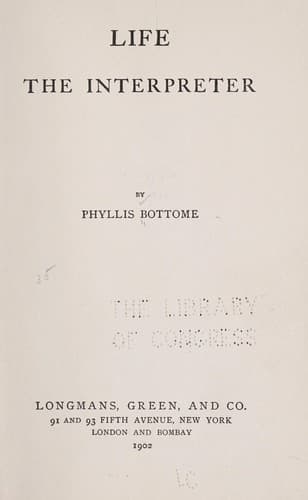
East End (London, England) -- Fiction; London (England) -- Social conditions -- Fiction; Social settlements -- Fiction
Muriel puzzled thoughtfully awhile over the rather grim pair she had
come into contact with. She had known very little of that great wide
world of professional life. Society and the slums, though they were a
great contrast, were not, she thought, so great a mystery. But though
Muriel was distinctly broad-minded for a woman, it was impossible for
her just at present to absorb herself in abstract problems when her own
life presented such pressing personal ones. Her first misery at Gladys’
jealousy and misunderstanding seemed gone. To her surprise she had begun
to feel almost a sense of relief. If she didn’t understand, it was plain
there was not so very much to worry about. If one looks for too many
things in one place, the few things one finds lose their significance.
It is not one’s love so much that gets dulled as one’s sense of
importance. The halo of expectation fails; next time one’s eagerness
goes with slower feet, and is positively astonished if it ever gets met
at all. So that now Muriel felt she had simply over-estimated both her
friends’ characters and affection, and that nothing therefore remained
but to clearly make Gladys see she did not intend to marry Jack Hurstly.
Her responsibility ended there she told herself, after that she need not
try to keep up this very unequal friendship any more. As for Cynthia
Grant, she was a woman and old enough to know what to take for granted,
and how not to be exacting.
CHAPTER X
“O Heart! O blood that freezes! blood that burns!
Earth’s returns for whole centuries of folly, noise, and sin:
Shut them in; with their triumphs and the glories and the rest—
Love is best!”
—ROBERT BROWNING.
Public-domain text, read in full here on John Shaqi.
Reviews
Reviews
No reviews yet
Be the first to share your thoughts on this work.
Join the Discussion
Join the discussion
Sign in to leave a comment or review.
Sign InorCreate an account