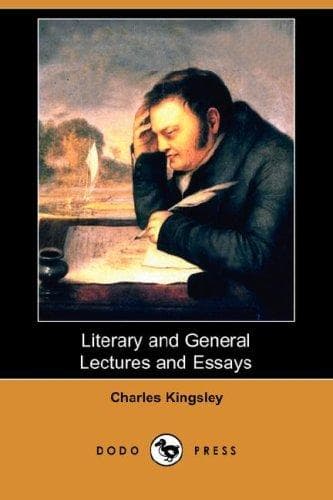
Literary and General Lectures and EssaysKingsley, Charles
History
Literary and General Lectures and Essays
Kingsley, Charles
English literature -- History and criticism
As for poetry written for the working classes by the upper, such
attempts at it as we yet have seen, may be considered nil. The upper
must learn to know more of the lower, and to make the lower know more
of them--a frankness of which we honestly believe they will never
have to repent. Moreover, they must read Burns a little more, and
cavaliers and Jacobites a little less. As it is, their efforts have
been as yet exactly in that direction which would most safely secure
the blessings of undisturbed obscurity. Whether "secular" or
"spiritual," they have thought proper to adopt a certain Tommy-good-
child tone, which, whether to Glasgow artisans or Dorsetshire
labourers, or indeed for any human being who is "grinding among the
iron facts of life," is, to say the least, nauseous; and the only use
of their poematicula has been to demonstrate practically the
existence of a great and fearful gulf between those who have, and
those who have not, in thought as well as in purse, which must be, in
the former article at least, bridged over as soon as possible, if we
are to remain one people much longer. The attempts at verse for
children are somewhat more successful--a certain little "Moral Songs"
especially, said to emanate from the Tractarian School, yet full of a
health, spirit, and wild sweetness, which makes its authoress, in our
eyes, "wiser than her teachers." But this is our way. We are too
apt to be afraid of the men, and take to the children as our pis-
aller, covering our despair of dealing with the majority, the adult
population, in a pompous display of machinery for influencing that
very small fraction, the children. "Oh, but the destinies of the
empire depend on the rising generation!" Who has told us so?--how do
we know that they do not depend on the risen generation? Who are
likely to do more work during our lifetime, for good and evil,--those
who are now between fifteen and five-and-forty, or those who are
between five and fifteen? Yet for those former, the many, and the
working, and the powerful, all we seem to be inclined to do is to
parody Scripture, and say: "He that is unjust, let him be unjust
still; and he that is filthy, let him be filthy still."
Public-domain text, read in full here on John Shaqi.
Reviews
Reviews
No reviews yet
Be the first to share your thoughts on this work.
Elsewhere in the archive
Join the Discussion
Join the discussion
Sign in to leave a comment or review.
Sign InorCreate an account