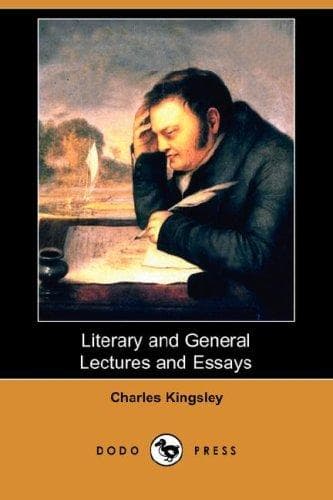
Literary and General Lectures and EssaysKingsley, Charles
History
Literary and General Lectures and Essays
Kingsley, Charles
English literature -- History and criticism
The answer so easy twenty years ago, that the new poetry was spoiled
by an influx of German bad taste, will hardly hold good now, except
with a very few very ignorant people. It is now known, of course,
that whatsoever quarrel Lessing, Schiller, and Goethe may have had
with Pope, it was not on account of his being too severe an artist,
but too loose a one; not for being too classical, but not classical
enough; that English poets borrowed from them nothing but their most
boyish and immature types of thought, and that these were reproduced,
and laughed at here, while the men themselves were writing works of a
purity, and loftiness, and completeness, unknown to the world--except
in the writings of Milton--for nearly two centuries. This feature,
however, of the new German poetry, was exactly the one which no
English poet deigned to imitate, save Byron alone; on whom,
accordingly, Goethe always looked with admiration and affection. But
the rest went their way unheeding; and if they have defects, those
defects are their own; for when they did copy the German taste, they,
for the most part, deliberately chose the evil, and refused the good;
and have their reward in a fame which we believe will prove itself a
very short-lived one.
We cannot deny, however, that, in spite of all faults, these men had
a strength. They have exercised an influence. And they have done so
by virtue of seeing a fact which more complete, and in some cases
more manly poets, did not see. Strangely enough, Shelley, the man
who was the greatest sinner of them all against the canons of good
taste, was the man who saw that new fact, if not most clearly, still
most intensely, and who proclaimed it most boldly. His influence,
therefore, is outliving that of his compeers, and growing and
spreading, for good and for evil; and will grow and spread for years
to come, as long as the present great unrest goes on smouldering in
men's hearts, till the hollow settlement of 1815 is burst asunder
anew, and men feel that they are no longer in the beginning of the
end, but in the end itself, and that this long thirty years' prologue
to the reconstruction of rotten Europe is played out at last, and the
drama itself begun.
Such is the way of Providence; the race is not to the swift, nor the
battle to the strong, nor the prophecy to the wise. The Spirit
bloweth where He listeth, and sends on his errands--those who deny
Him, rebel against Him--profligates, madmen, and hysterical
Rousseaus, hysterical Shelleys, uttering words like the east wind.
He uses strange tools in His cosmogony: but He does not use them in
vain. By bad men if not by good, by fools if not by wise, God's work
is done, and done right well.
Public-domain text, read in full here on John Shaqi.
Reviews
Reviews
No reviews yet
Be the first to share your thoughts on this work.
Join the Discussion
Join the discussion
Sign in to leave a comment or review.
Sign InorCreate an account