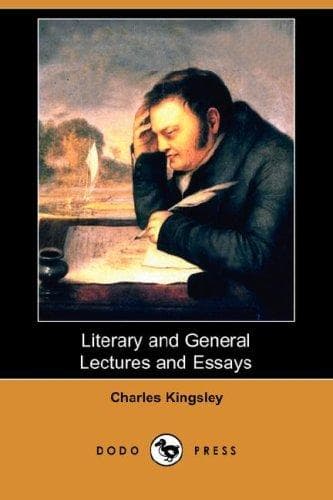
Literary and General Lectures and EssaysKingsley, Charles
History
Literary and General Lectures and Essays
Kingsley, Charles
English literature -- History and criticism
The truth is, that what has put Byron out of favour with the public
of late has been not his faults but his excellences. His artistic
good taste, his classical polish, his sound shrewd sense, his hatred
of cant, his insight into humbug above all, his shallow, pitiable
habit of being always intelligible--these are the sins which condemn
him in the eyes of a mesmerising, table-turning, spirit-rapping,
spiritualising, Romanising generation, who read Shelley in secret,
and delight in his bad taste, mysticism, extravagance, and vague and
pompous sentimentalism. The age is an effeminate one, and it can
well afford to pardon the lewdness of the gentle and sensitive
vegetarian, while it has no mercy for that of the sturdy peer proud
of his bull neck and his boxing, who kept bears and bull-dogs,
drilled Greek ruffians at Missoloughi, and "had no objection to a pot
of beer;" and who might, if he had reformed, have made a gallant
English gentleman; while Shelley, if once his intense self-opinion
had deserted him, would have probably ended in Rome as an Oratorian
or a Passionist.
We would that it were only for this count that Byron has had to make
way for Shelley. There is, as we said before, a deeper moral
difference between the men, which makes the weaker, rather than the
stronger, find favour in young men's eyes. For Byron has the most
intense and awful sense of moral law--of law external to himself.
Shelley has little or none; less, perhaps, than any known writer who
has ever meddled with moral questions. Byron's cry is, I am
miserable because law exists; and I have broken it, broken it so
habitually, that now I cannot help breaking it. I have tried to
eradicate the sense of it by speculation, by action; but I cannot--
The tree of knowledge is not the tree of life.
There is a moral law independent of us, and yet the very marrow of
our life, which punishes and rewards us by no arbitrary external
penalties, but by our own consciousness of being what we are:
The mind which is immortal, makes itself
Requital for its good or evil thoughts;
Is its own origin of ill, and end--
And its own place and time--its innate sense
When stript of this mortality derives
No colour from the fleeting things about,
But is absorbed in sufferance or in joy,
Born from the knowledge of its own desert.
Public-domain text, read in full here on John Shaqi.
Reviews
Reviews
No reviews yet
Be the first to share your thoughts on this work.
Join the Discussion
Join the discussion
Sign in to leave a comment or review.
Sign InorCreate an account