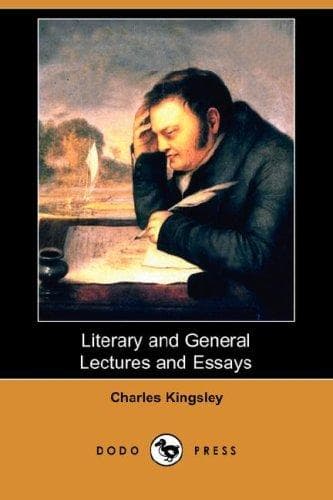
Literary and General Lectures and Essays — John Shaqi
Literary and General Lectures and EssaysKingsley, Charles
History
Literary and General Lectures and Essays
Kingsley, Charles
English literature -- History and criticism
For nightingale notes they truly are. In spite of all his faults--
and there are few poetic faults in which he does not indulge, to
their very highest power--in spite of his "interfluous" and
"innumerous," and the rest of his bad English--in spite of bombast,
horrors, maundering, sheer stuff and nonsense of all kinds, there is
a plaintive natural melody about this man, such as no other English
poet has ever uttered, except Shakespeare in some few immortal songs.
Who that has read Shelley does not recollect scraps worthy to stand
by Ariel's song--chaste, simple, unutterably musical? Yes, when he
will be himself--Shelley the scholar and the gentleman and the
singer--and leave philosophy and politics, which he does not
understand, and shriekings and cursings, which are unfit for any
civilised and self-respecting man, he is perfect. Like the American
mocking-bird, he is harsh only when aping other men's tunes--his true
power lies in his own "native wood-notes wild."
But it is not this faculty of his which has been imitated by his
scholars; for it is not this faculty which made him their ideal,
however it may have attracted them. All which sensible men deplore
in him is that which poetasters have exalted in him. His morbidity
and his doubt have become in their eyes his differential energy,
because too often, it was all in him with which they had wit to
sympathise. They found it easy to curse and complain, instead of
helping to mend. So had he. They found it pleasant to confound
institutions with the abuses which defaced them. So had he. They
found it pleasant to give way to their spleen. So had he. They
found it pleasant to believe that the poet was to regenerate the
world, without having settled with what he was to regenerate it. So
had he. They found it more pleasant to obey sentiment than inductive
laws. So had he. They found it more pleasant to hurl about enormous
words and startling figures than to examine reverently the awful
depths of beauty which lie in the simplest words and the severest
figures. So had he.
Public-domain text, read in full here on John Shaqi.
Reviews
Reviews
No reviews yet
Be the first to share your thoughts on this work.
Join the Discussion
Join the discussion
Sign in to leave a comment or review.
Sign InorCreate an account