“It was one preached upon by your mother’s great-great-grandfather, the
very savory and much-respected Simeon Shuttleworth, ‘on the occasion of
the melancholy defections and divisions among the godly in the town of
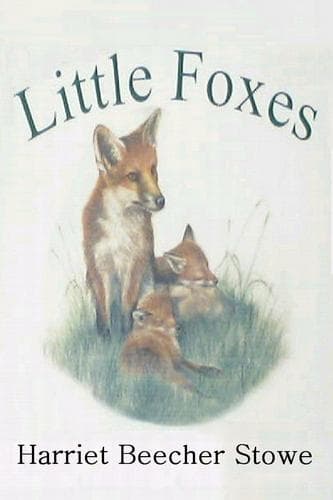
West Dofield’; and it runs thus,--‘_Take us the foxes, the little foxes,
that spoil the vines: for our vines have tender grapes._’”
“It’s a curious text enough; but I can’t imagine what you are going to
make of it.”
“Simply an essay on Little Foxes,” said I, “by which I mean those
unsuspected, unwatched, insignificant _little_ causes, that nibble away
domestic happiness, and make home less than so noble an institution
should be.
“You may build beautiful, convenient, attractive houses,--you may hang
the walls with lovely pictures and stud them with gems of Art; and there
may be living there together persons bound by blood and affection in one
common interest, leading a life common to themselves and apart from
others; and these persons may each one of them be possessed of good and
noble traits; there may be a common basis of affection, of generosity,
of good principle, of religion; and yet, through the influence of some
of these perverse, nibbling, insignificant little foxes, half the
clusters of happiness on these so promising vines may fail to come to
maturity. A little community of people, all of whom would be willing to
die for each other, may not be able to live happily together; that is,
they may have far less happiness than their circumstances, their fine
and excellent traits, entitle them to expect.
“The reason for this in general is that home is a place not only of
strong affections, but of entire unreserves; it is life’s undress
rehearsal, its back-room, its dressing-room, from which we go forth to
more careful and guarded intercourse, leaving behind us much _débris_ of
cast-off and every-day clothing. Hence has arisen the common proverb,
‘No man is a hero to his _valet-de-chambre_’; and the common warning,
‘If you wish to keep your friend, don’t go and live with him.’”
“Which is only another way of saying,” said my wife, “that we are all
human and imperfect; and the nearer you get to any human being, the more
defects you see. The characters that can stand the test of daily
intimacy are about as numerous as four-leaved clovers in a meadow; in
general, those who do not annoy you with positive faults bore you with
their insipidity. The evenness and beauty of a strong, well-defined
nature, perfectly governed and balanced, is about the last thing one is
likely to meet with in one’s researches into life.”
Public-domain text, read in full here on John Shaqi.
Reviews
Reviews
No reviews yet
Be the first to share your thoughts on this work.
Join the Discussion
Join the discussion
Sign in to leave a comment or review.
Sign InorCreate an account